In 2025, Korea raised its engagement with the world to reach another turning point, widening its diplomatic scope and making its economy resilient amid turmoil. Hallyu (Korean Wave) permeated the daily lives of people worldwide and Korean society took a step forward in welcoming others from abroad as neighbors. This is the second in a series of reviewing the past year in the country's diplomacy, economy, culture and immigration policy.
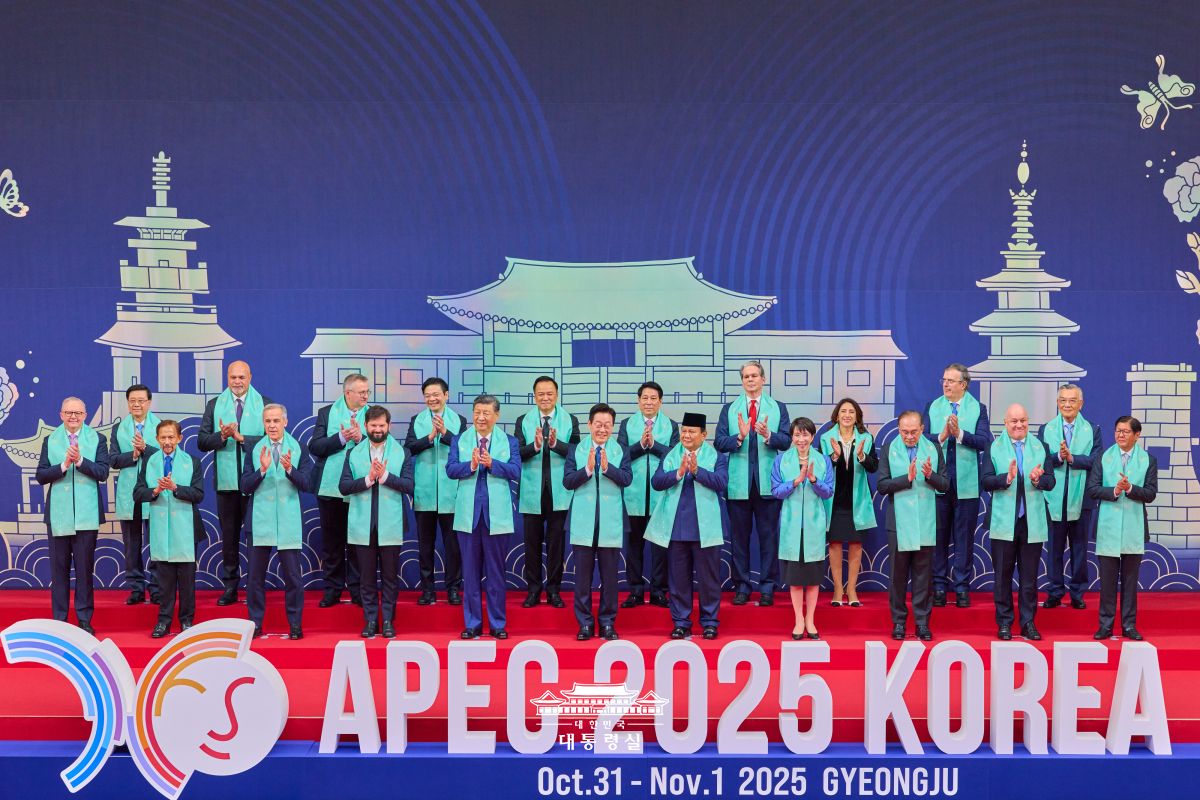
President Lee Jae Myung (fifth from left in front row) on Nov. 1 poses for a group photo with leaders of member economies of the Asia-Pacific Economic Cooperation at their main session held at Gyeongju Hwabaek International Convention Center in Gyeongju, Gyeongsangbuk-do Province.
By Jeon Misun
Photos = Office of the President
2025 saw an emphasis on pragmatic diplomacy centered on national interests to regain the nation's global status. Since the Lee administration took office in June, the focus shifted toward restructuring of a turbulent diplomatic landscape and return to a central position on the international stage.
External uncertainty intensified amid tariff renegotiations after the launch of the second Trump administration in the U.S., escalating America's rivalry with China and getting North Korea and Russia closer. In response, Seoul accelerated efforts to normalize diplomacy with a pragmatic approach at the core.
![▲ 이재명 대통령(첫 줄 오른쪽 네 번째)이 지난 11월 22일(현지 시간) 남아프리카공화국 요하네스버그에 위치한 나스렉 엑스포센터에서 열린 '주요 20개국(G20) 정상회의'에서 기념 촬영을 하고 있다. [출처] 대한민국 정책브리핑(www.korea.kr)거뒀다. 사진은 4일 오전 중국 하얼빈 핑팡 컬링 아레나에서 열린 컬링 믹스더블 라운드로빈 B조 필리핀과의 경기 장면. 연합뉴스](/upload/content/editImage/20251208162135364_HPYVFL98.jpeg)
President Lee (fourth from right in front row) on Nov. 22 poses for a group photo at the G20 summit of advanced and developing economies at the Nasrec Expo Centre in Johannesburg, South Africa.
This year saw Korea attend major international conferences including the G7 summit of major economies, United Nations (U.N.) General Assembly, Association of Southeast Asian Nations summit, G20 gathering of advanced and developing economies, and Asia-Pacific Economic Cooperation (APEC) forum.
The APEC event in Gyeongju, Gyeongsangbuk-do Province, was especially symbolic of Korea's return as a global pivotal state. Seoul made its presence felt as both a coordinator of and contributor to key issues such as supply chains, climate change and security.
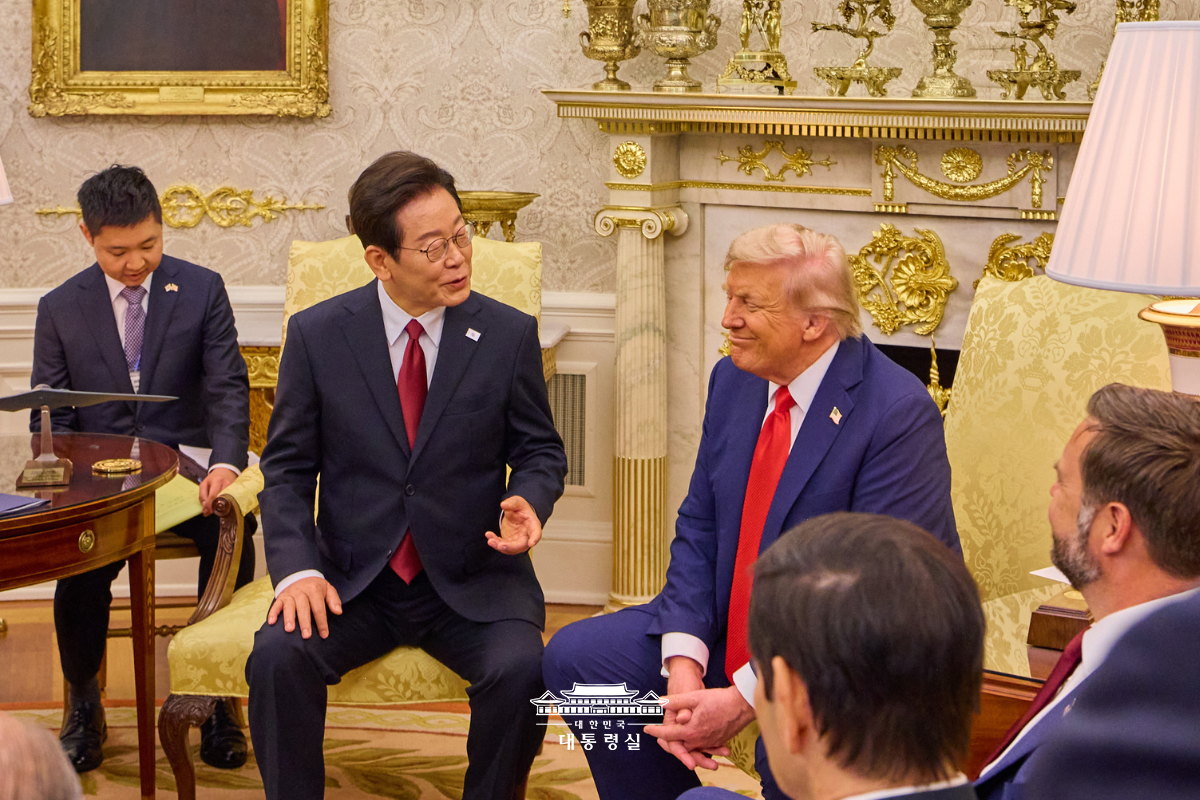
President Lee (second from left) on Aug. 25 speaks at his bilateral summit with U.S. President Donald Trump at the White House in Washington.
Bilateral diplomacy focused on core management rather than expansion. Despite pressure from tariff renegotiations, Korea and the U.S. laid the foundation for stable cooperation by agreeing on a joint fact sheet to minimize trade barriers, and talks on Korea's bid to build its own nuclear-powered submarines also advanced.
Despite successive changes in Japan's prime ministers, shuttle diplomacy with Tokyo continued without disruption. And relations with China regained momentum thanks to Chinese President Xi Jinping's first visit to Korea in 11 years for APEC.
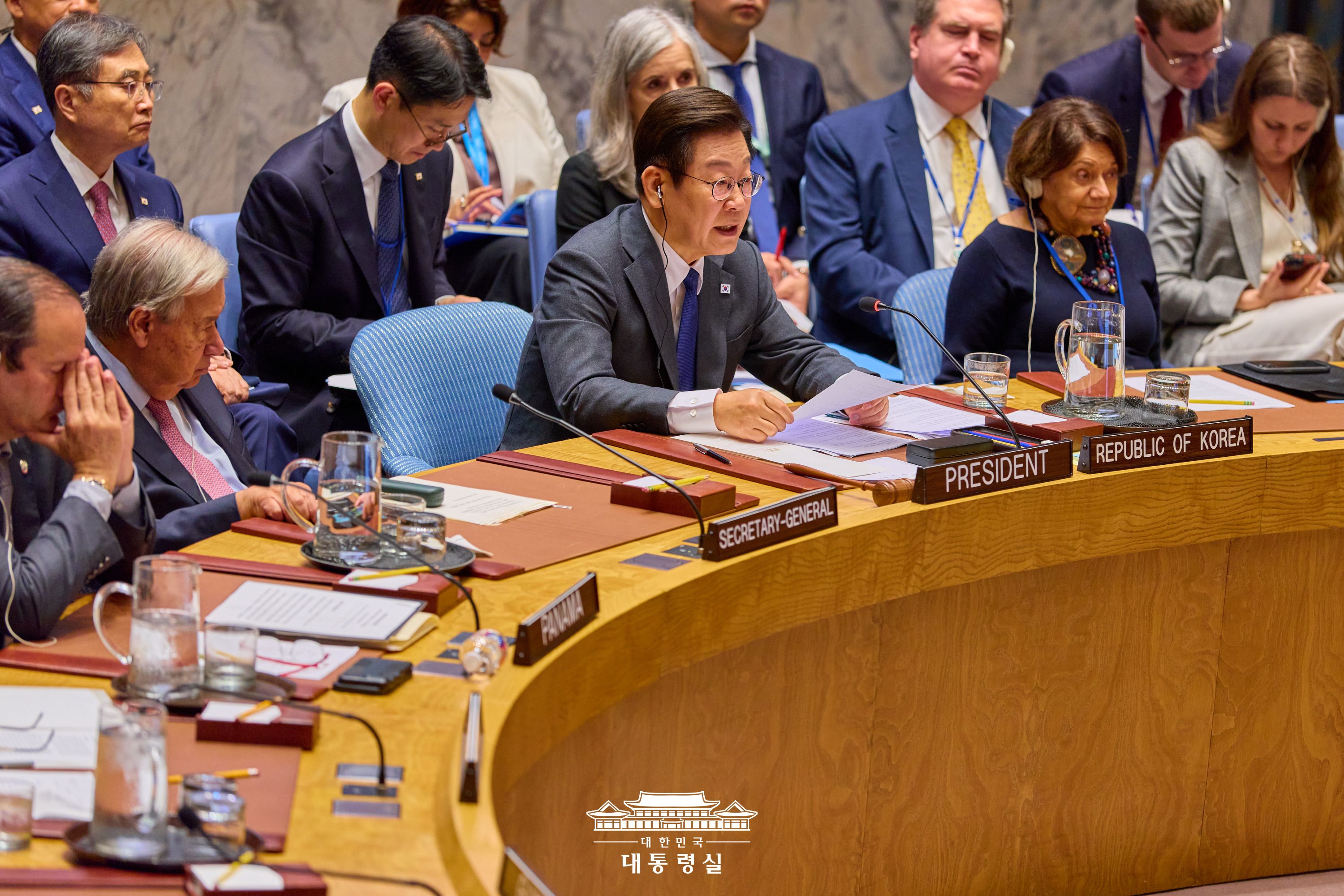
President Lee, as head of state of the chair country of the U.N. Security Council, on Sept. 24 hosts an open debate at the world body's headquarters in New York.
On North Korea, South Korea continued sending conciliatory messages despite the North's lack of response. As chair of the U.N. Security Council in September, Seoul emphasized the need for peace on the Korean Peninsula and proposed a phased denuclearization plan based on the Exchange, Normalization and Denuclearization (END) Initiative, which received a positive response from the U.N. General Assembly and public support from U.N. Secretary-General Antonio Guterres.
President Lee also pledged to play the role of "pacemaker" for the U.S. to resume dialogue with the North, expressing his commitment to actively helping reopen communication channels.
Foreign policy in 2025 saw major progress based on three pillars: return to the multilateral stage, stable management of bilateral relations and committing to inter-Korean dialogue with North Korea. The year also marked a major shift as the country regained its status as a "global pivotal state" by responsibly contributing to key world challenges.
msjeon22@korea.kr
![[2025 review ④] Reliable, competitive economy amid low growth](/upload/content/image/7d0cf764608f436694fc058c34a11a2b_20251216132950.jpg)
![[2025 review ③] Immigration policy goes from 'mgmt.' to 'settlement'](/upload/content/image/6a413d99597146b0ab69fc03729b0e7c_20251215143455.jpg)
![[2025 review ①] 'Demon Hunters,' 'Squid Game,' 'APT.' rule Hallyu](/upload/content/image/2af3d0e0e7e744458e956eb53575d3f5_20251208111037.jpg)