- 한국어
- English
- 日本語
- 中文
- العربية
- Español
- Français
- Deutsch
- Pусский
- Tiếng Việt
- Indonesian
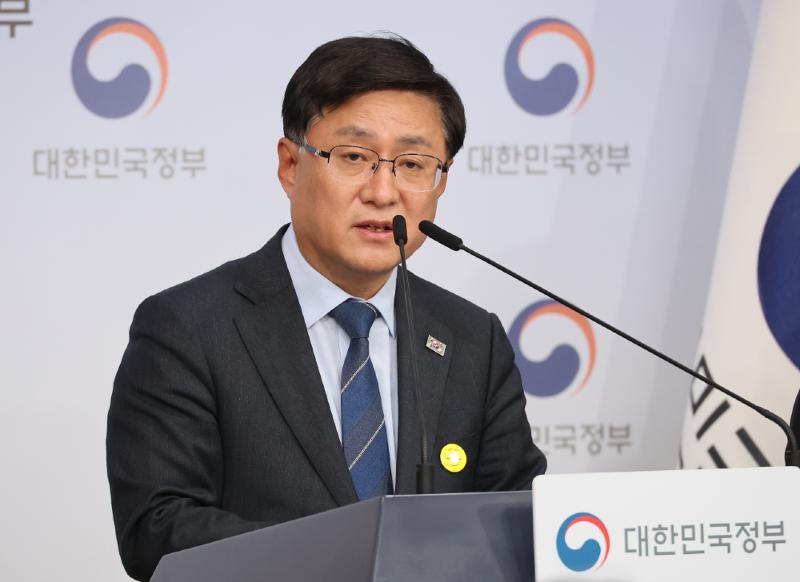
Minister of Climate, Energy and Environment Kim Sungwhan on April 6 announces his ministry's plan for energy transition at a news conference held at Government Complex-Seoul in the capital's Jongno-gu District. (Yonhap News)
By Yoon Sojung
Amid the energy crisis triggered by the war in the Middle East, the Ministry of Climate, Energy and Environment will move up its goal of supplying 100 gigawatts of renewable energy before the original 2030 deadline and raise the share of green power generation to over 20%.
Another task to be achieved before 2030 is to raise the penetration rate of electric and hydrogen-powered vehicles from 14% to 40% for new cars, reduce dependence on fossil fuels and overhaul the energy system focusing on renewables.
Minister of Climate, Energy and Environment Kim Sungwhan on April 6 announced these initiatives as part of an energy transition plan at a Cabinet meeting and an emergency economic review conference at Cheong Wa Dae in Seoul.
The plan's three major policy directions and 10 tasks seek to fundamentally change the domestic energy structure, proposing a new energy security system to drastically reduce dependence on imported energy.
First, the targeted deployment of 100 gigawatts of renewable energy will be moved up to before 2030 to expand the share of green power generation to over 20%.
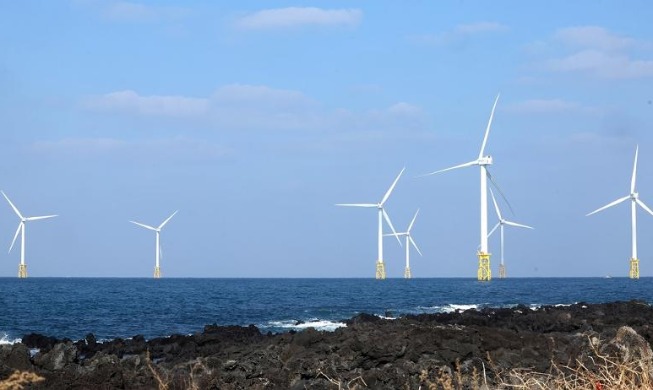
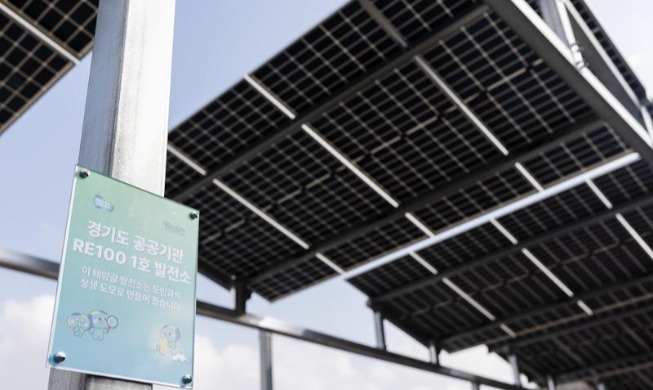
In solar energy, all possible methods will be mobilized like "sunshine income villages," rooftop solar cells for industrial complexes and the global initiative Renewable Energy 100%, aka RE100, for public organizations. Also planned are the shortening of wind power project periods and revamp of the safety inspection system for wind turbines.
A roadmap will phase out 60 coal power plants before the original target of 2040 and "just transition" measures will include enacting laws for areas affected by the phaseout and development of alternative industries. Gas-based thermal energy will also be converted into renewable heat.
District heating that uses liquefied natural gas will also be changed to renewable energy-based means by prioritizing the supply of air- and water-source heat pumps to areas lacking city gas.
The second policy direction is for the country to join the world's top three powers in green energy along with the U.S. and China by launching an energy industrial ecosystem and fostering the eco-friendly sector.
The plan promotes the development and testing of key technologies and tax support for solar cells, modules, wind turbines, battery energy storage systems, power lines, transformers and water electrolysis facilities.
In industry, other goals are the electrification of processes and cleanup of fuels and raw materials. A 300,000-ton hydrogen reduction demonstration facility slated for completion in 2028 will be expanded for commercial use after 2037 to lay the basis for Korea's emergence as a green steel power.
Another task is the electrification of all moving power sources. The share of electric and hydrogen vehicles in new car supply will be raised to up to 40% before 2030, and police cars, liquefied petroleum gas taxis, and rental and corporate vehicles will undergo this change early.
The integration of artificial intelligence and electrification will also affect construction and agricultural machinery, ships and motorcycles.
The third policy direction is energy transition for regional balanced development. Slated for transformation into a decentralized, bidirectional grid is the power production and consumption system, which has traditionally generated massive electricity volume from coal and nuclear power plants at large-scale facilities for transmission to the Seoul metropolitan area.
The inevitable imbalance in power supply among regions will be resolved through the construction of flexible lines such as a high voltage direct current network on the western coast and flexible connections. A full-scale demonstration and expansion of "energy self-sufficient decentralized special zones" from the second half of the year will use resources such as biogas, wood chips and solar power at the village level.
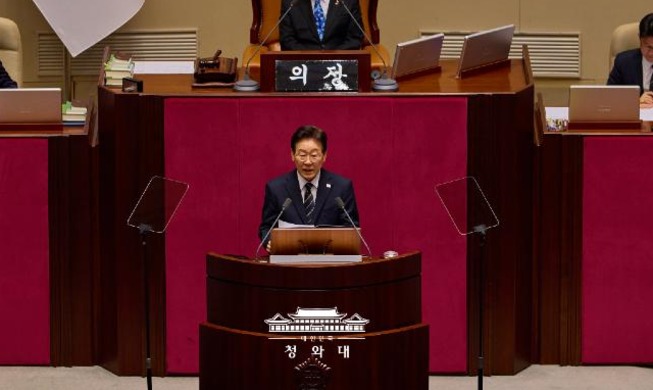
President Lee Jae Myung at the Cabinet meeting stressed accelerated implementation of energy transition centered on renewable energy, urging the need to deregulate procedures for related approval and screening.
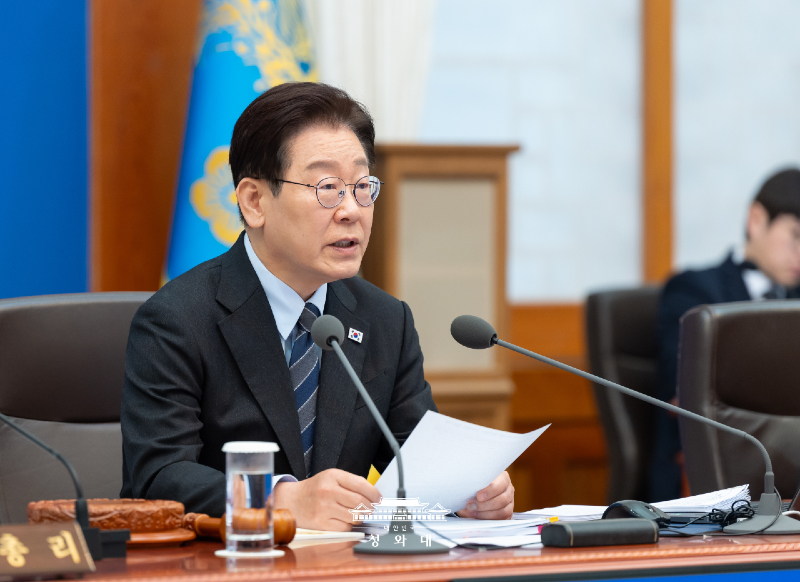
President Lee Jae Myung on April 6 stresses speedy policy implementation of a massive energy transition centering on renewable energy as well as the need to deregulate approval and screening of the energy transition roadmap at a Cabinet meeting held at Cheong Wa Dae in Seoul. (Cheong Wa Dae)