The administration of President Lee Jae Myung marks its first anniversary in early June. Since its launch on June 4, 2025, it has laid the groundwork for change across sectors under the national vision "A nation where the people rule, a Republic of Korea where everyone is happy." To mark this occasion, Korea.net reflects on the government's key achievements in five installments. This third part of the series looks at key policies for raising the baseline standard of living spanning childcare, medical and labor over the past year.
By Kim Hyelin
Workplace fatalities down 17.5%, KRW 1.8 trillion worth of long-term delinquent debts written off, national rollout of integrated community care, and a 4.7% rise in the population of pilot rural and fishing villages.
These are among the results of the first year of President Lee Jae Myung's administration, which set as its national policy goal for the social sector "a society with a solid basis."
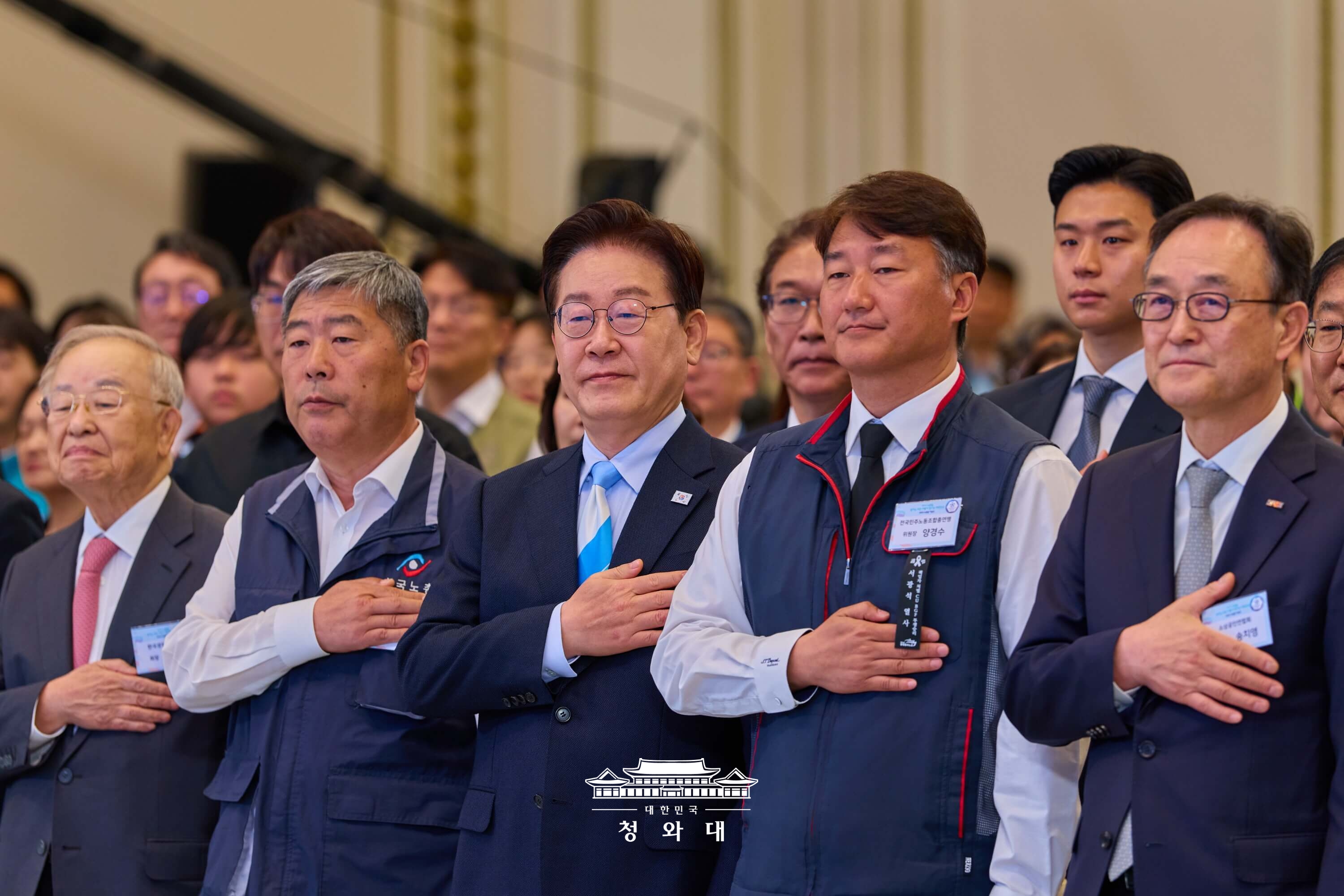
President Lee Jae Myung (third from left) on May 1 attends a Labor Day ceremony hosted by Cheong Wa Dae in Seoul. (Cheong Wa Dae)
Rewriting labor rights
The Yellow Envelope Act, an amendment to the Trade Union and Labor Relations Adjustment Act, expands a primary contractor's status as an employer to cover subcontracted workers and limits the liability for damages of workers on strike. Workers' Day was also renamed Labor Day.
The number of injuries at work also fell thanks to comprehensive measures for occupational safety and a raise in the industrial safety budget to a record-high KRW 1.57 trillion. Thus the number of deaths from industrial incidents in the first quarter dropped 17.5% year on year, the lowest since the compilation of relevant statistics was launched in 2022.
Working conditions and work-life balance also saw improvement. From 2027, a "fair allowance" will be launched for 73,000 short-term contract workers in the public sector, or about half of 146,000 fixed-term staff, so that they will receive differentiated payments of 8.5%-10% of the standard amount of KRW 2,545,000 per month, equal to 118% of the minimum wage, depending on contract period.
The number of people going on parental leave jumped 39.1% year on year, with that of men taking paternity leave surging 60.7% to 67,000.
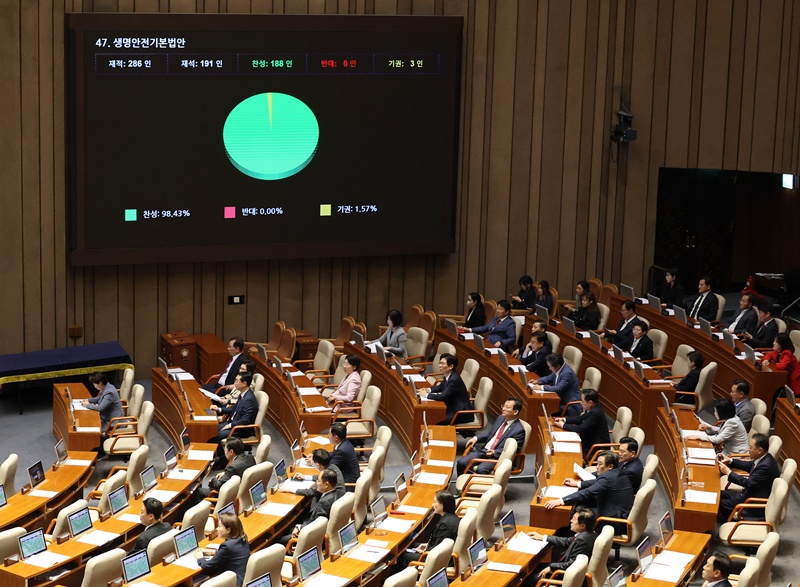
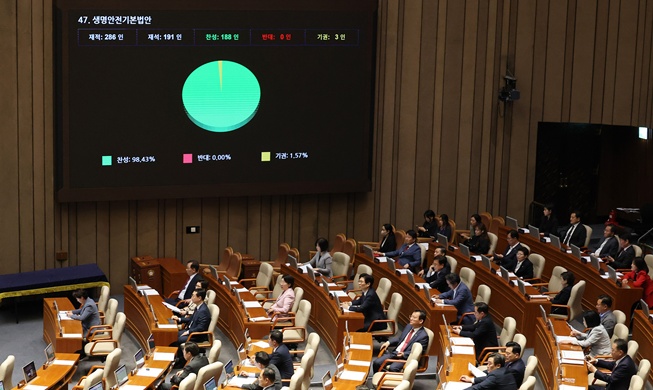
The National Assembly in a plenary session on May 7 passes the Framework Act on Life Safety. (Yonhap News)
Safety as a national responsibility
Twelve years after the disastrous sinking of the Sewol ferry on April 16, 2014, the enactment of the Framework Act on Life Safety legally stipulated the public's right to safety. A government-sponsored gathering for the relatives of the victims of four major disasters, including the deadly 2019 crowd crush in Seoul's Itaewon neighborhood, marked a shift that raised safety to the realm of law and central government responsibility.
Changes on the ground were also evident. Areas hit by wildfires in spring this year fell 99% year on year with zero casualties. The average time to extinguish a major fire dropped from 3 hours and 44 minutes to 1 hour and 34 minutes over the past five years.
Large-scale events were held throughout the year, most notably the comeback concert of K-pop supernova BTS at Gwanghwamun Square in Seoul, but no crowd-related incidents occurred.
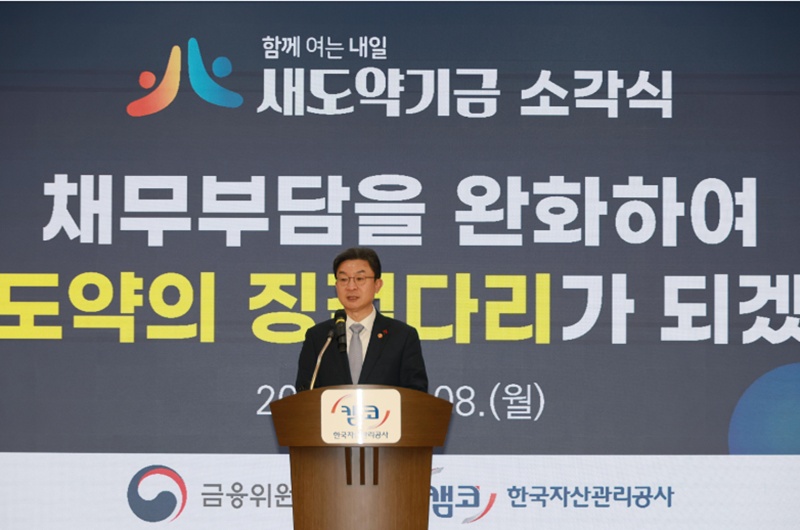
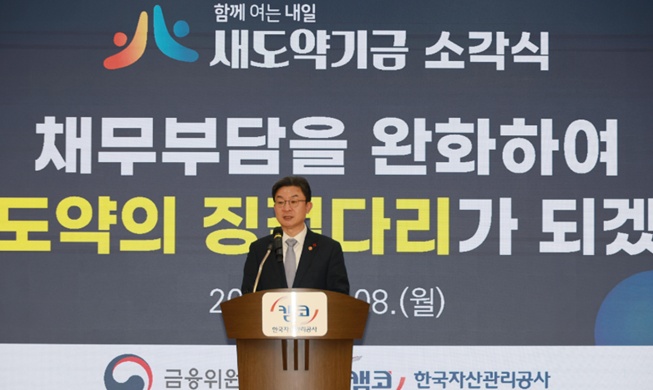
Financial Services Commission (FSC) Chairman Lee Eog-weon on Dec. 8, 2025, speaks at a ceremony to launch the New Leap Fund at the auditorium KAMCO Maru of the Busan International Finance Center in Busan's Nam-gu District. (FSC)
Credit recovery via forgiveness of long-term debt defaults
Long-term debt default is a major hurdle in life that prevents an individual from returning to economic activity. To mitigate this burden, the launch of the New Leap Fund led to the purchase of KRW 8.4 trillion in bad debt of up to KRW 50 million in arrears for seven or more years.
This immediately terminated debt collection for about 660,000 individuals. Of the debt amount, KRW 1.8 trillion owed by 200,000 socially vulnerable people was written off first.
The threshold for microfinance was also lowered. Interest rates on policy microfinance products for such people were cut from a cap of 15.9% to 12.5%, including a special guarantee for the Sunshine Loan for those with the lowest credit scores.
The new Youth Future Link Loan provides up to KRW 5 million at an annual interest rate of 4.5% to unemployed youth or those in the early stages of their careers who lack a credit history.
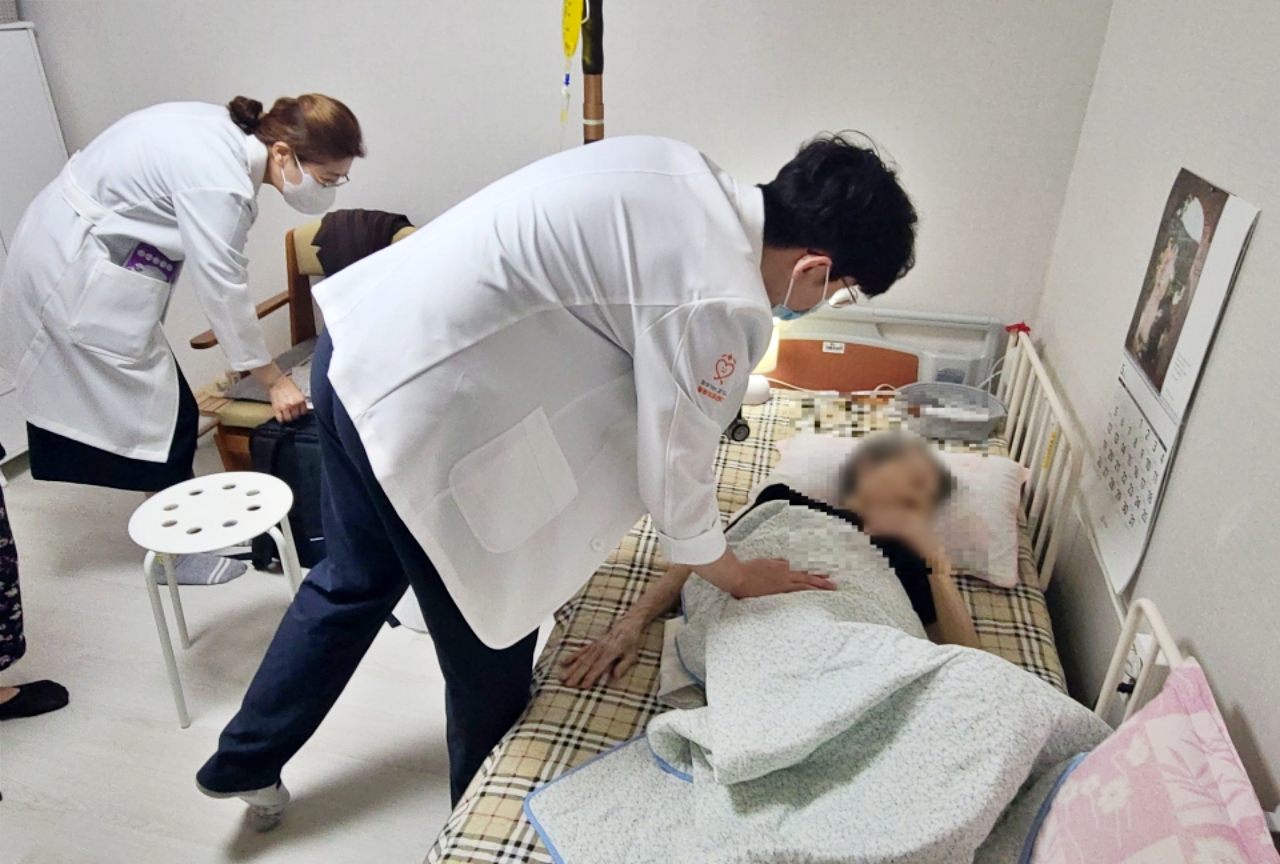
Staff from Gyeonggi-do Province's visiting medical care center treat a patient at her home. (Gyeonggi Provincial Office)
Meticulous welfare embedded in daily life
Another sector seeing a major shift was the caregiving system. Under the Act on Integrated Support for Community Care Including Medical Cure and Nursing Care, such assistance was expanded nationwide.
The system allows the elderly, people with disabilities and the mentally ill to receive medical support and care at home simultaneously instead of at a medical facility. An average 3.3 services are offered to each person.
The basic livelihood security benefit was raised from KRW 2 million a month for a four-person household to KRW 2.08 million, exceeding KRW 2 million for the first time. The Just Dream initiative, which provides quick meals to the destitute and connects them to welfare counseling, marked its 100,000th cumulative user and private donations are also active.
The pilot project for rural basic income also yielded meaningful results. A basic monthly allowance of KRW 150,000 in the form of regional currency vouchers go to residents, encouraging consumption in their respective regions. Distribution began in 10 select counties in February last year.
The population in the beneficiary regions grew 4.7%, with 43% of new residents coming from the Seoul metropolitan area -- Seoul, Incheon and Gyeonggi-do Province -- and nearby cities. The number of registered stores in the pilot areas also rose 13.2%.
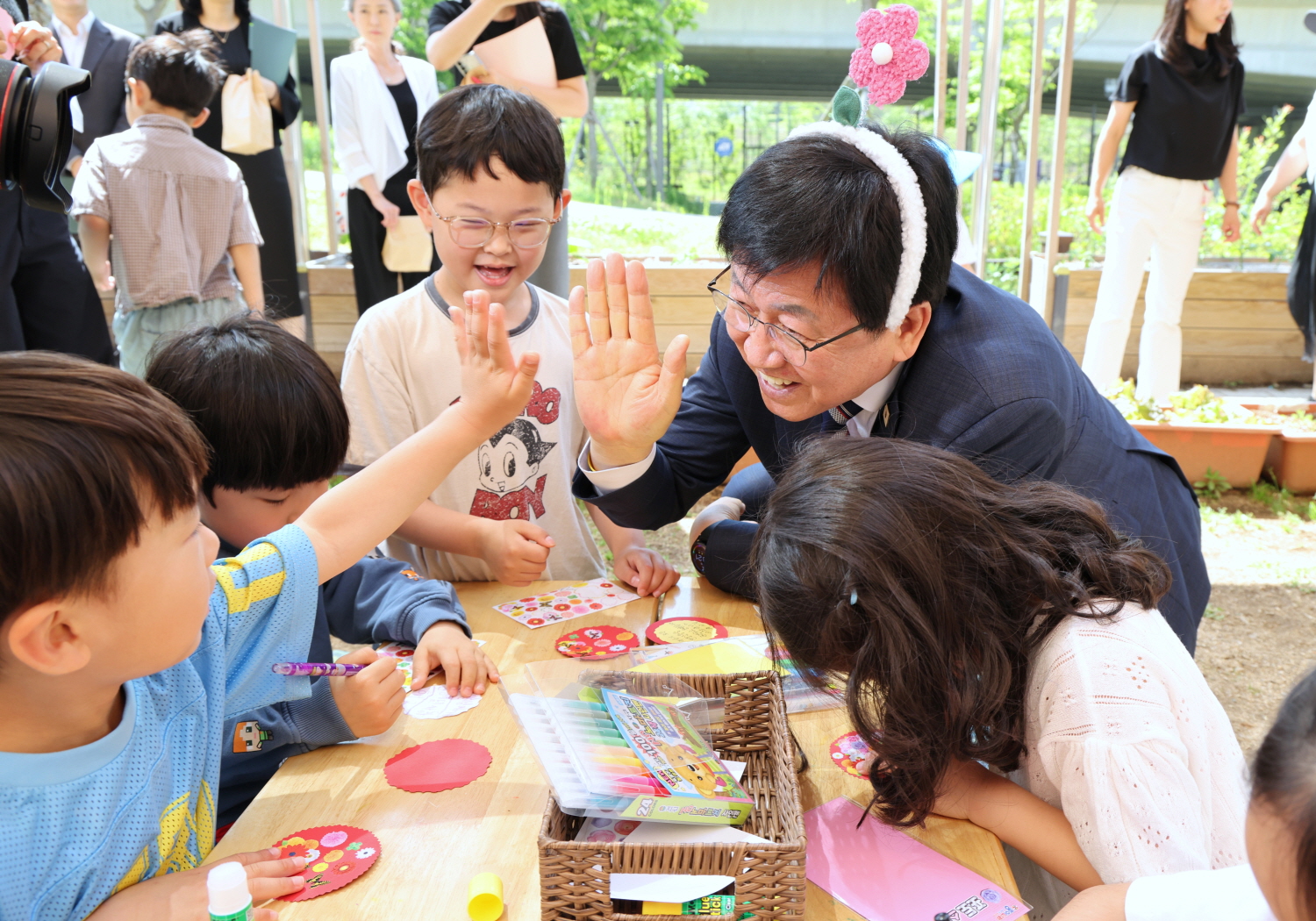
Minister of Education Choi Kyo Jin (second from right) on May 15 interacts with children at Haemil Kindergarten in Sejong on the occasion of Teachers' Day.
Public assistance from birth
A combined 278,000 children aged 5 from July last year began receiving free education and childcare benefits. The scope of beneficiaries was expanded to 503,000 children ages 4-5 from March this year.
Tuition for kindergarten was slashed 41.4% and fees for daycare 18.3% year on year. The number of children attending both rose by approximately 65,000.
Vouchers each worth KRW 500,000 went to third graders to enable their participation in the Neulbom School program, which integrates care classes and afterschool programs in elementary school. This is part of a system of "whole neighborhood elementary school care and education."
The number of elementary school students receiving government care increased 108,000.
In regional balance, 35 autonomous public and contract-based specialized high schools were launched. Initiatives included the setup of 10 Seoul National University-level institutions and human resource development centered on provincial universities. The competition rate for such universities jumped 11.6% year on year.
In a Cabinet meeting on May 20, President Lee announced the direction for his second year, saying, "It's time to reflect again on our original aspirations and renew our commitment to national governance to achieve bigger and more practical changes in people's lives."
If the past year was spent on building legal and institutional frameworks, the remainder of his term should go toward ensuring delivery of tangible benefits to the public.
kimhyelin211@korea.kr
![[President Lee: Year 1] ② Lee-conomic growth via AI, chips, stocks](/upload/content/image/6bb97a3b63cb4228a2f85ba67eae406b_20260521100749.jpg)
![[President Lee: Year 1] ① Nat'l interests over ideology in diplomacy, security](/upload/content/image/789fb9184e1c4a5096d9e74f23feb58b_20260520132603.jpg)

![[Fertility fix] ② Expanded support seeks to ease parenting burden](/upload/content/image/0e930efa3d3b4e37811fa804c9961929_20260410141231.png)