- 한국어
- English
- 日本語
- 中文
- العربية
- Español
- Français
- Deutsch
- Pусский
- Tiếng Việt
- Indonesian
The administration of President Lee Jae Myung marks its first anniversary in early June. Since its launch on June 4, 2025, it has laid the groundwork for change across sectors under the national vision "A nation where the people rule, a Republic of Korea where everyone is happy." To mark this occasion, Korea.net reflects on the government's key achievements in five installments. This fourth part of the series looks at the country's progress in advancing as a global cultural power over the past year.
By Xu Aiying
Photos = Cheong Wa Dae
Marking its first anniversary, the administration of President Lee Jae Myung is accelerating efforts to achieve its core national strategy of building "a creative cultural nation for all."
Culture and arts, sports and tourism are receiving support as key engines of national growth under the vision of Korea rising to one of the world's top five cultural powers and entering the era of a KRW 300 trillion cultural industry. The past year saw Seoul focus on setting the institutional basis to raise the global competitiveness of the content industry while safeguarding creative autonomy.
Cultural diplomacy during President Lee's overseas visits was expanded into a national strategy centered on Korean culture. Through summit diplomacy and trips abroad, the administration promoted key agenda including joint production of Korean cultural content, investment cooperation in the cultural sector, stimulation of tourism exchanges and Korean-language education partnerships.
These measures allowed the strengthening of cultural diplomacy into a framework connecting it to economic cooperation.
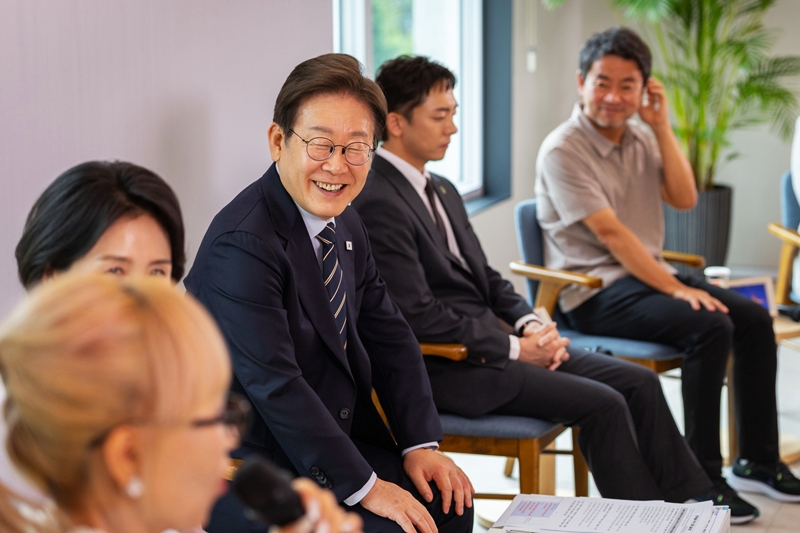
President Lee Jae Myung (third from left) on June 30, 2025, smiles while listening to artists speak at a meeting with award-winning figures from culture and arts at the Office of the President in Seoul's Yongsan-gu District.
Domestic content designated national strategic industry
The administration greatly expanded tax support and policy financing to raise competitiveness across the content industry spanning webtoons, games, cinema, musicals and K-pop.
More tax credits for content production costs came and a content policy fund worth KRW 731.8 billion was launched. Research and development funding for fostering AI-based content industries rose 42% from the previous year to a record-high KRW 151.5 billion.
The administration also got tougher on copyright infringement and illegal streaming, while launching the Presidential Committee on Popular Culture Exchange to systematically position the content industry as a national strategic sector.
Thanks to these efforts, content exports last year set a record-high USD 14.9 billion.
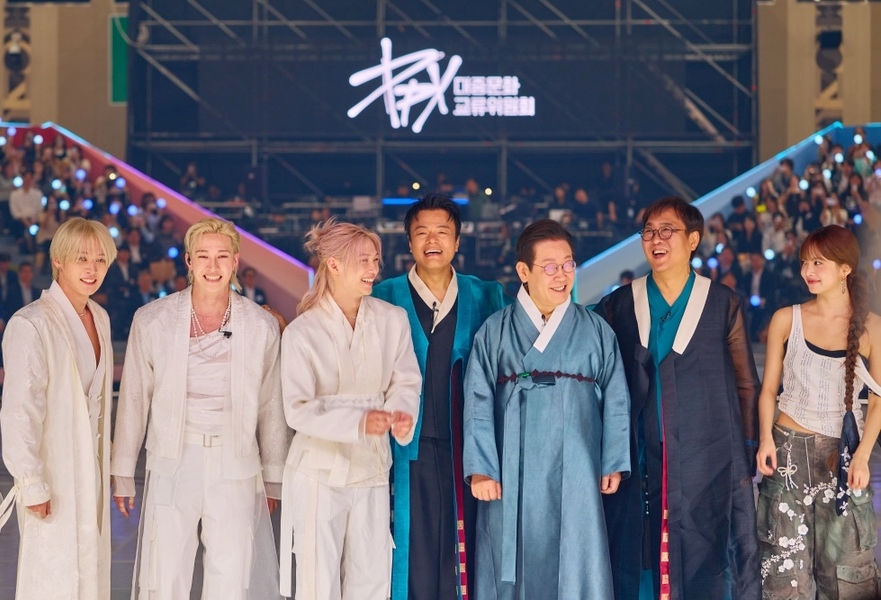
President Lee Jae Myung (fifth from left) on Oct. 1, 2025, poses for a group photo with Park Jin-young, co-chair of the Presidential Committee on Popular Culture Exchange, and K-pop bands Stray Kids and LE SSERAFIM at the committee's launching ceremony at the convention center KINTEX in Goyang, Gyeonggi-do Province.
Expansion of global cultural diplomacy, record no. of tourists
Global cultural diplomacy gained momentum, utilizing Korean culture as both a national brand and diplomatic asset. The country hosted the inaugural Asia-Pacific Economic Cooperation High-Level Dialogue on Cultural and Creative Industries (CCI), officially adopting CCI as an agenda item.
The unanimous joint statement at the meeting laid the groundwork for a platform for global cultural cooperation.
In tourism, the goal of attracting 30 million tourists per year saw the pursuit of measures including a temporary visa-free program for Chinese group tourists and the easing of fast-track entry procedures for international conference participants.
This resulted in 4.76 million visitors in this year's first quarter, the highest on record for the period. Arrivals at provincial airports also surged 49.7%, signaling momentum for a more balanced distribution of tourism demand.
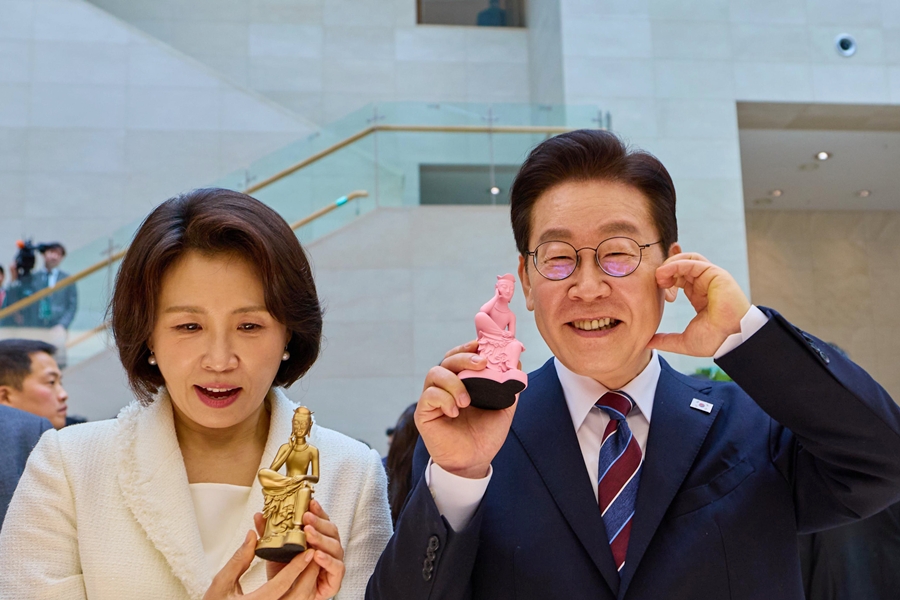
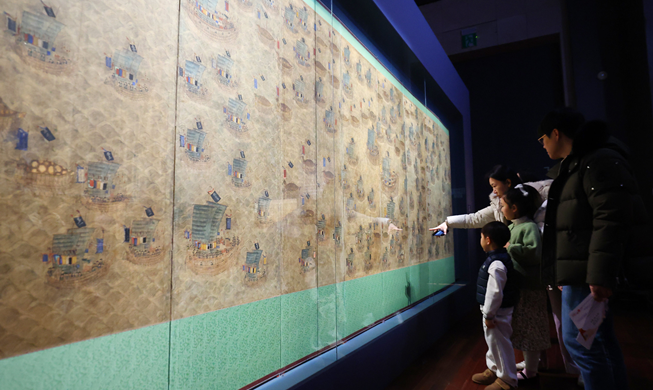
President Lee Jae Myung (right) and first lady Kim Hea Kyung on Feb. 26 hold souvenirs at a gift store after visiting the exhibition "The Great Admiral Yi Sun-Sin" at the National Museum of Korea in Seoul's Yongsan-gu District.
Reinforcing creative autonomy and cultural welfare
More support widened access by vulnerable groups to cultural enjoyment through programs such as integrated culture vouchers and the Culture Nuri Card. Culture Day was also expanded every Wednesday.
The National Museum of Korea emerged as the world's third most-visited museum last year with 6.5 million visitors. A regional "love vacation" support program featuring half-price travel targeted areas at risk of depopulation, which helped ease the Seoul-centric cultural structure and substantially improved access to provincial attractions.
In its first year, the Lee administration emphasized the cultural sector's "arm's length principle," upholding a policy stance of "support without interference." Initiatives such as an artist welfare fund and more backing for young creators raised creator autonomy and allowed a stable environment for creative production.
xuaiy@korea.kr
![[President Lee: Year 1] ① Nat'l interests over ideology in diplomacy, security](/upload/content/image/789fb9184e1c4a5096d9e74f23feb58b_20260520132603.jpg)
![[President Lee: Year 1] ② Lee-conomic growth via AI, chips, stocks](/upload/content/image/6bb97a3b63cb4228a2f85ba67eae406b_20260521100749.jpg)
![[President Lee: Year 1] ③ Raising care, medical, labor benefits](/upload/content/image/773e6b65311c411ea5fac75cc1c2c919_20260527163819.jpg)