The administration of President Lee Jae Myung marks its first anniversary in early June. Since its launch on June 4, 2025, it has laid the groundwork for change across sectors under the national vision "A nation where the people rule, a Republic of Korea where everyone is happy." To mark this occasion, Korea.net reflects on the government's key achievements in five installments. This concluding part of the series is a photo essay of the key moments of change and progress achieved by the Lee administration.
By Lee Jeongwoo
Overcoming chaos: launch of people's sovereignty and economic recovery
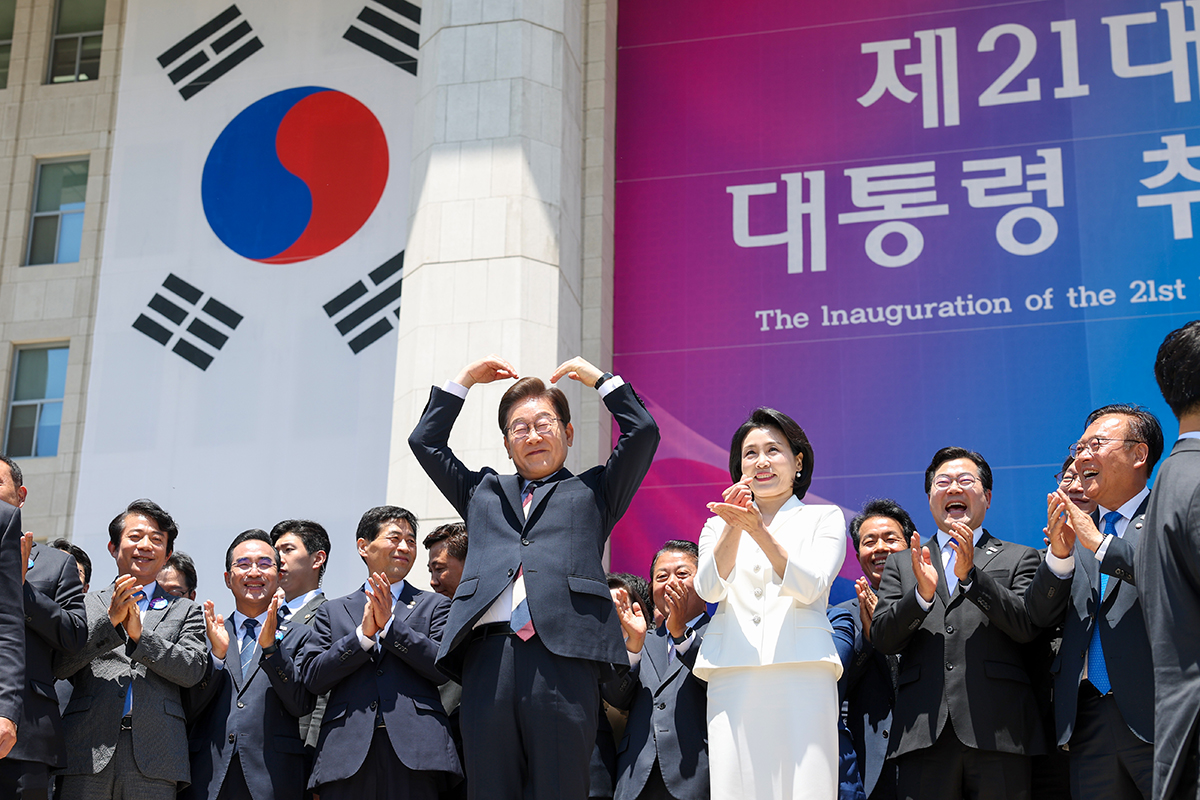
President Lee Jae Myung (center left in front) on June 4, 2025, makes a heart-shaped gesture next to first lady Kim Hea Kyung before leaving his inauguration ceremony at the National Assembly in the Yeouido neighborhood of Seoul's Yeongdeungpo-gu District. (Lee Jeongwoo)
The inauguration ceremony for the country's 21st presidency on June 2, 2025, at the National Assembly in the Yeouido neighborhood of Seoul's Yeongdeungpo-gu District marked the launch of the Lee Jae Myung administration.
In his inauguration speech, President Lee outlined his plan to focus his efforts on "popular sovereignty" and "restoration of people's livelihoods." More than a formality, the event heralded the administration's resolution of political chaos and restarted the stalled clock of national governance back in motion.
Politics of national unity, field-based communication
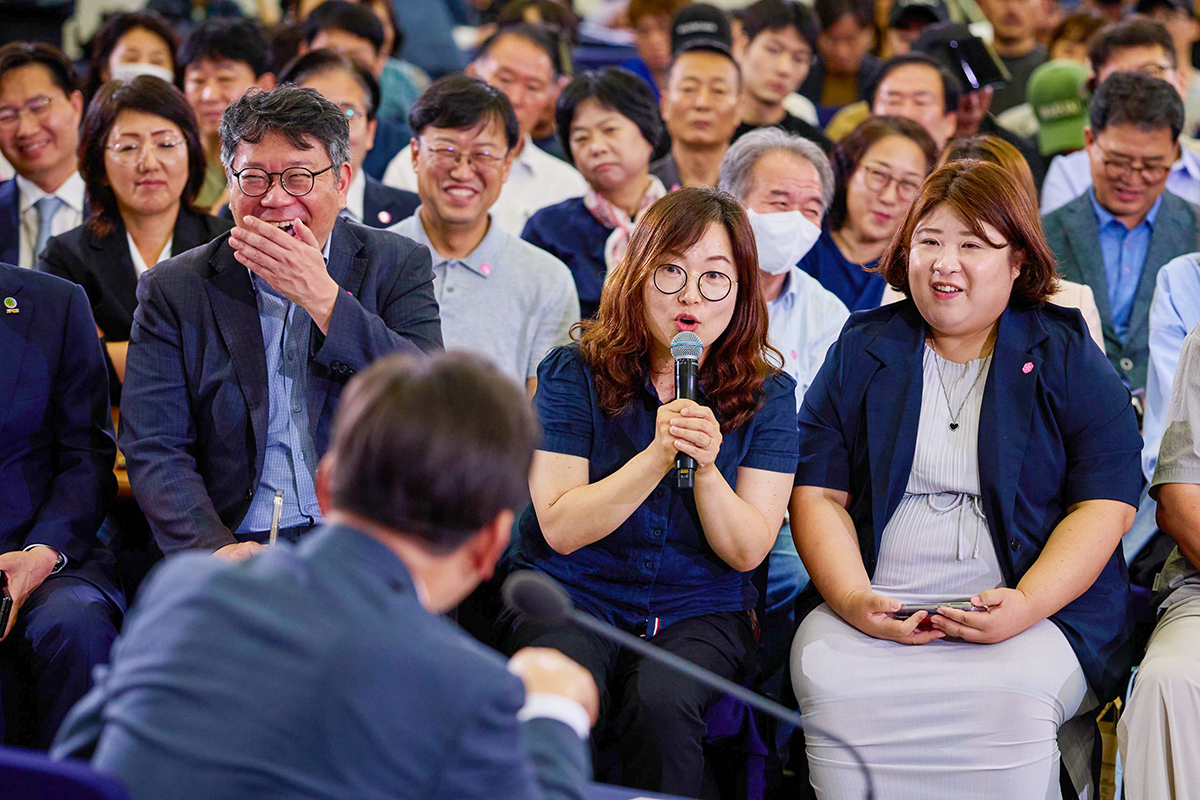
President Lee Jae Myung on July 4, 2025, listens to a member of the audience speak at a town hall meeting at Daejeon Convention Center in Daejeon's Yeseong-gu District. (Cheong Wa Dae)
In its first year, the administration made its dialogue with the people go beyond the confines of government conference rooms. Its determination to overcome division and achieve national unity took concrete shape through a series of town hall meetings.
Since taking office, President Lee has hosted such talks in 12 venues nationwide including Gwangju, Daejeon and Busan. These gatherings were not unilateral policy briefings by the president or his administration but rather interactive public forums where residents of the provinces could propose solutions to regional issues and development plans, giving the government the opportunity to incorporate such ideas into national policy agenda.
Real-time streaming government, opening of national governance process
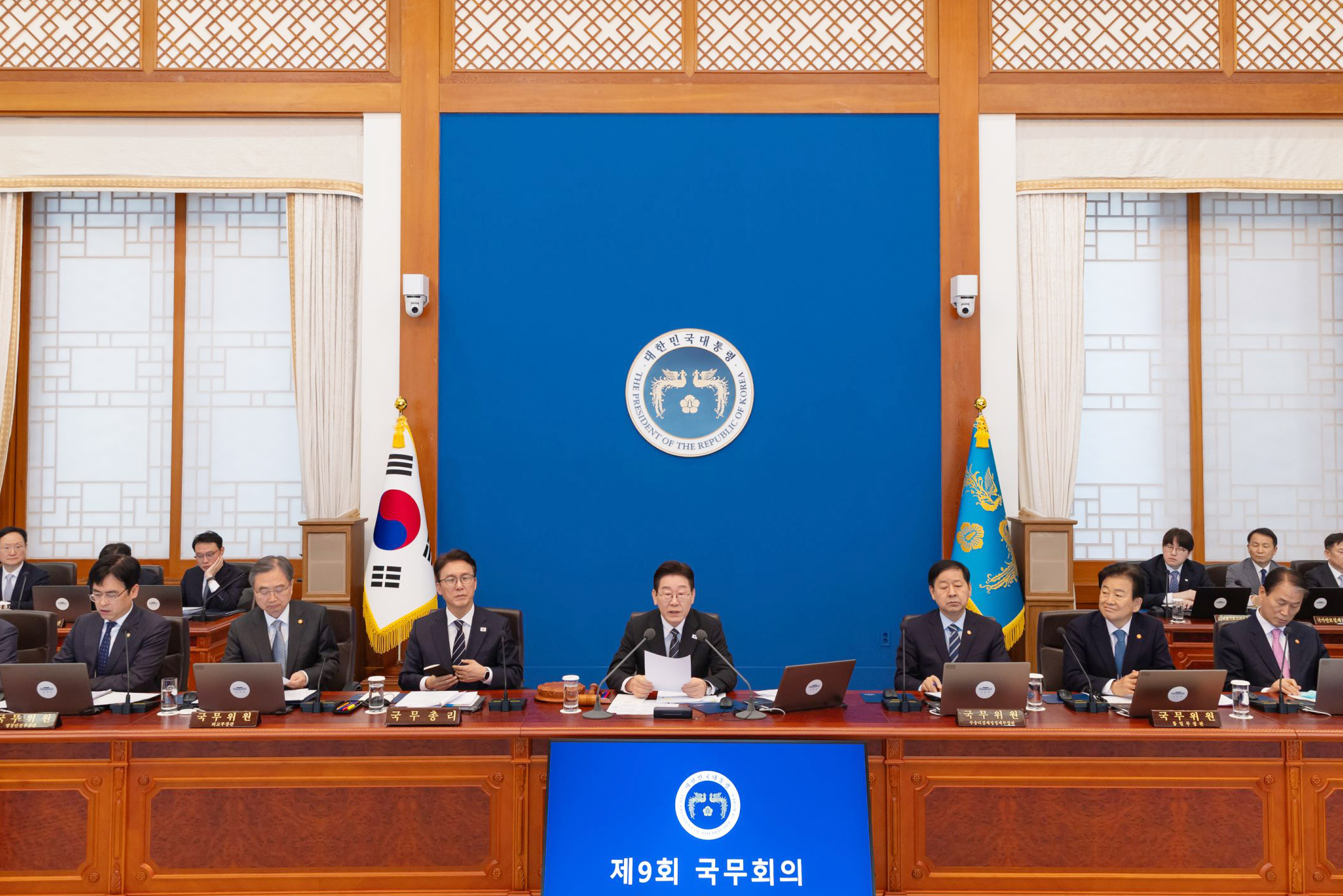
President Lee Jae Myung (center) on March 10 speaks at a Cabinet meeting hosted by Cheong Wa Dae in Seoul broadcast live to the public. (Cheong Wa Dae)
The administration expanded its communication with the public beyond "governance through visitation" to "governance through demonstration." The livestreaming of key governance moments including Cabinet meetings and policy briefings transparently presented the policy decision-making process to the public, creating Korea's first "real-time communication (streaming) government."
The government broke away from the approach of merely delivering the results of national affairs to the public by sharing the entire process of policy discussion and coordination. The people are now not merely recipients of policy information but real-time participants in governance, representing a major shift in communication in line with the digital platform era.
Korea premium: stock market surges
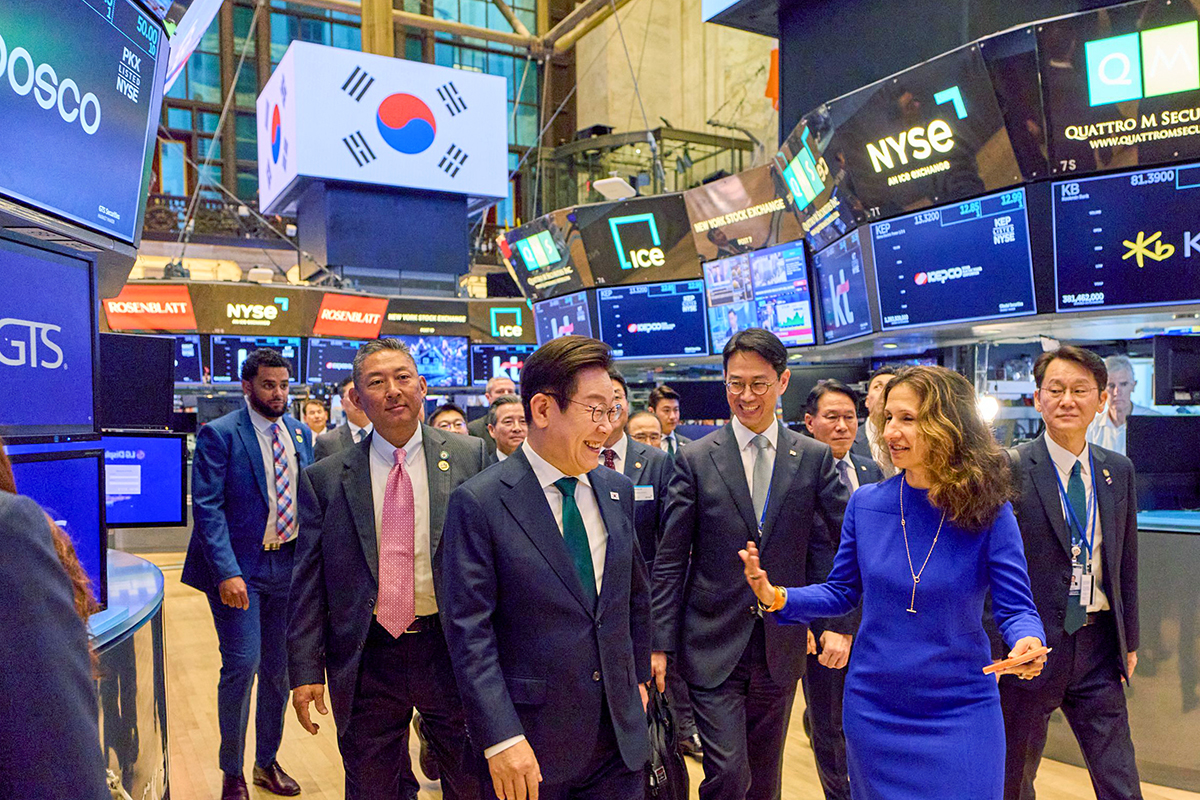
President Lee Jae Myung (left in front) on Sept. 25, 2025, at the New York Stock Exchange talks with the exchange's president Lynn Martin. (Cheong Wa Dae)
The administration laid out an ambitious vision to revive the economy and overcome low growth through the advancement of future industries such as artificial intelligence (AI) and biotechnology, alongside an energy transition.
The vision is to make Korea one of the world's top three AI powers, achieve the potential growth rate of 3% and rank among the world's top five economies. To achieve these goals, the launch of 30 major projects for AI transformation and a hyper-innovative economy sought to accelerate industrial restructuring and expand the foundation for growth.
The fruits of this approach were first seen in the capital market. The nation's benchmark stock index KOSPI, which had hovered precariously near the 2,000 level just a year earlier, on May 26 closed above 8,000 for the first time in history, pushing the market cap to KRW 6,581 trillion.
This raised the KOSPI's ranking to seventh in the world by market cap. More than a record-breaking rise in share prices, the milestone demonstrated a fundamental global reassessment of Korea's growth basis and corporate value and provided compelling evidence of the transition from the "Korea discount," or the notion of the chronic undervaluation of the nation's stocks, to a new era of the "Korea premium."
Balanced growth for equitable prosperity, revival of provincial commercial districts
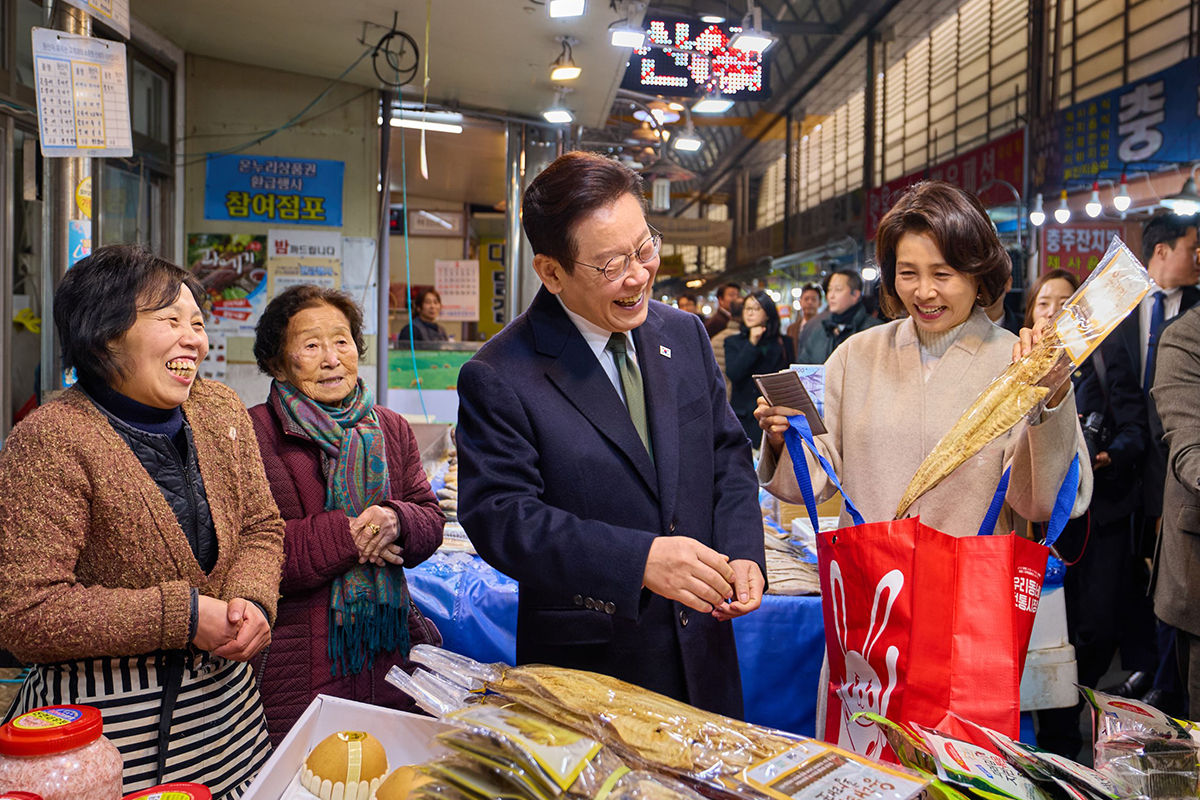
President Lee Jae Myung (third from left) and first lady Kim Hea Kyung on Feb. 11 check prices and buy traditional goods at Muhak Market in Chungju, Chungcheongbuk-do Province, ahead of the Seollal (Lunar New Year) holidays. (Cheong Wa Dae)
The administration broadened the direction of national development beyond the focus on the Seoul metropolitan area and corporations to the provinces, the livelihood economy, small business owners and traditional markets.
For the goal of balanced growth and universal prosperity, a strategy of five major regions and three special self-governing provinces was adopted. Through this initiative, Seoul reorganized balanced national growth around economic zones in the provinces, injecting vitality into stagnant commercial districts through stimulation of domestic demand through measures like livelihood stimulus coupons.
Society with strong roots: safety net to protect people in daily life
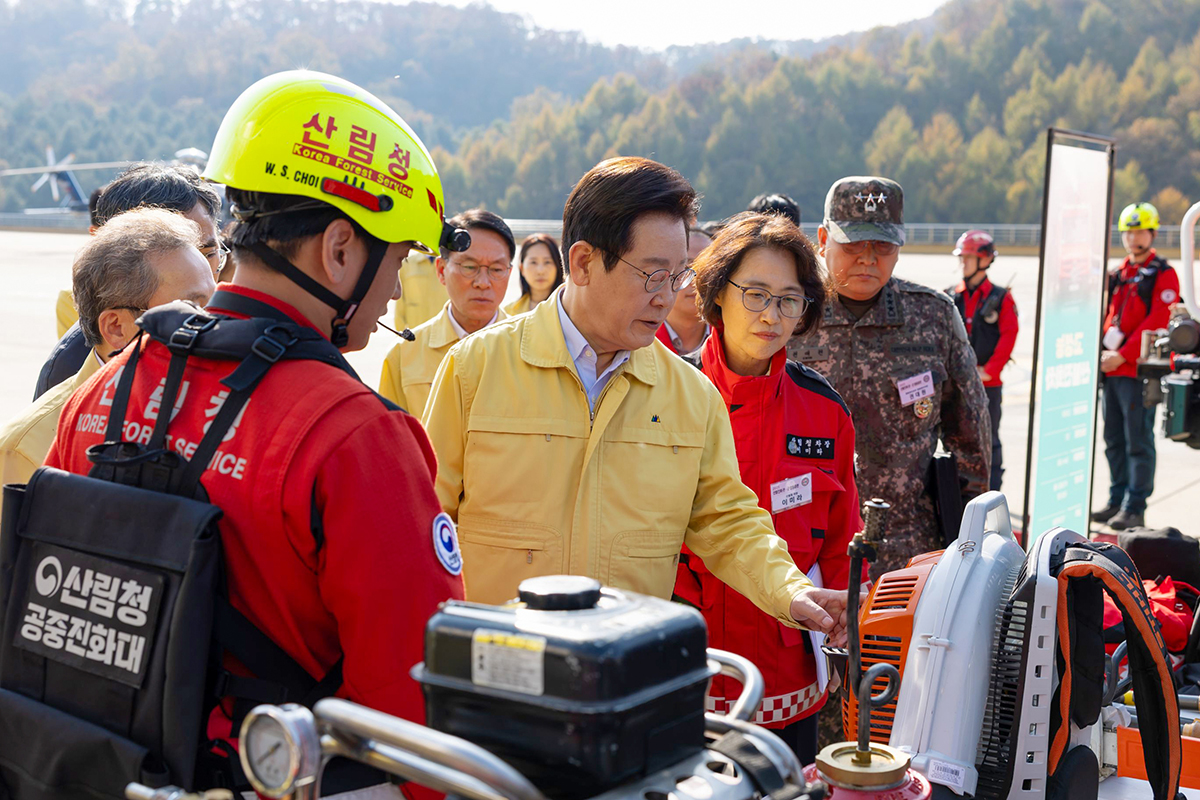
President Lee Jae Myung (center) on Nov. 11, 2025, inspects firefighting equipment used in a joint government-military drill to put out wildfires. (Cheong Wa Dae)
The administration emphasized the building of a social safety net to protect the public in times of crisis. It shifted the welfare paradigm toward community-integrated care centered on residents while closing gaps in labor protection.
Seoul also revamped its response to complex disasters amid the climate change era by upgrading government responsibility to safeguard public safety.
Pragmatic diplomacy for national interests, presence on multilateral stage
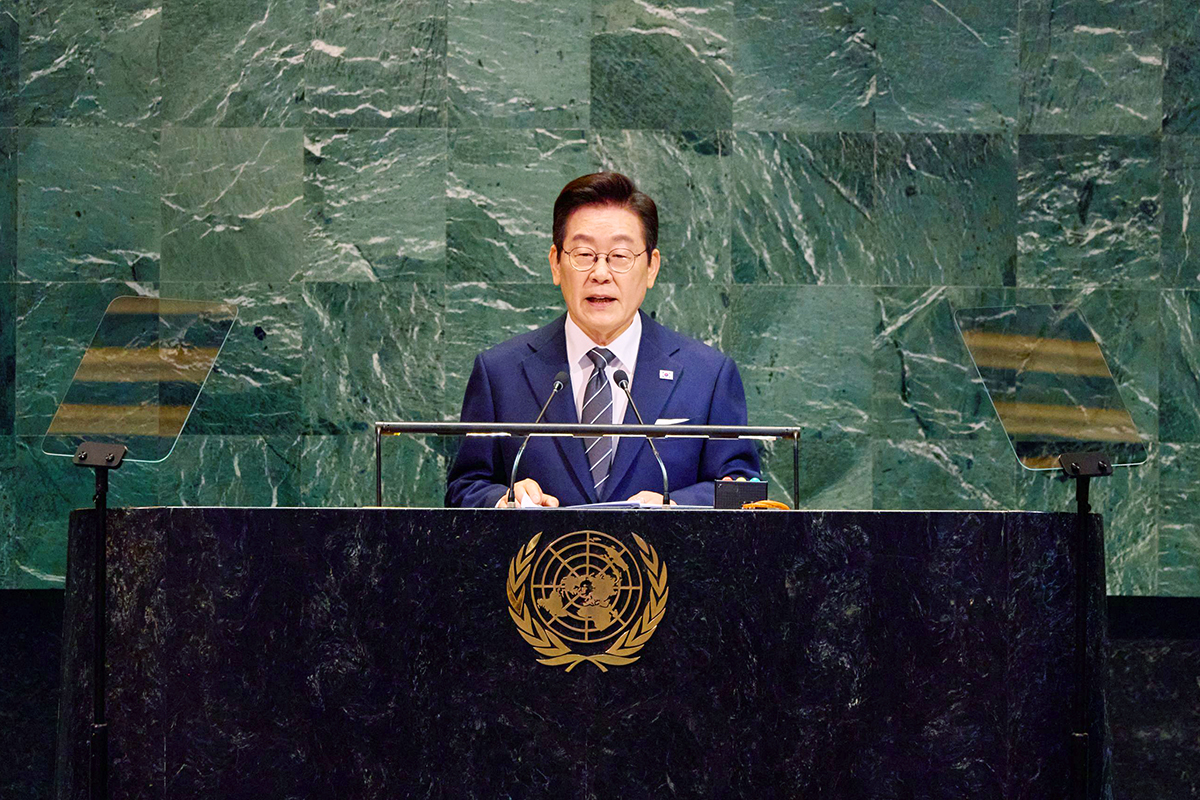
President Lee Jae Myung on Sept. 23, 2025, gives a keynote speech at the United Nations General Assembly in New York. (Cheong Wa Dae)
In diplomacy and national security, the administration's first year was highlighted by its swift restoration of summit diplomacy and an expanded presence on the multilateral stage. Korea amplified its voice on major diplomatic stages including the G7 summit of the world's top seven economies, United Nations General Assembly and G20.
The nation's successful hosting of the 2025 Asia-Pacific Economic Cooperation forum in Gyeongju, Gyeongsangbuk-do Province, was also a defining moment that showcased the nation's diplomatic capabilities and status as a pivotal global state to the world.
From daily life to global stage, emphasis on tangible change
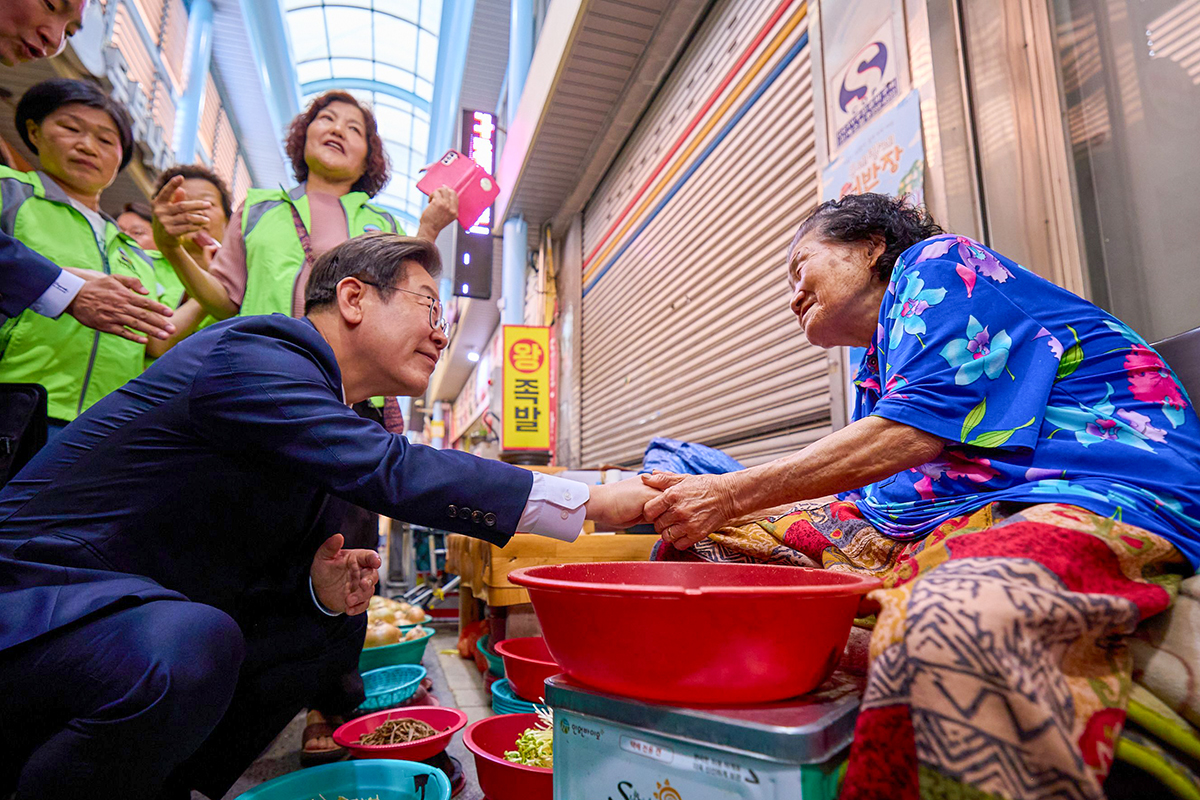
President Lee Jae Myung (left in front) on June 20, 2025, shakes hand with a merchant at Eonyang Alps Market in Ulsan. (Cheong Wa Dae)
The first year of the Lee administration saw a continuous stream of achievements that spanned communication with the people, economic revival, the people's livelihoods, public safety and engagement with the world.
Beginning with daily life of the people and an expanded role on the world stage, if the administration's first year was about setting the course of national governance, the years ahead will focus on achieving tangible changes keenly felt by the people.
b1614409@korea.kr
![[President Lee: Year 1] ④ Drive to make Korea top 5 cultural power](/upload/content/image/c4db32cefec94ab79ac11292e2e83879_20260522183222.jpg)
![[President Lee: Year 1] ③ Raising care, medical, labor benefits](/upload/content/image/773e6b65311c411ea5fac75cc1c2c919_20260527163819.jpg)
![[President Lee: Year 1] ② Lee-conomic growth via AI, chips, stocks](/upload/content/image/6bb97a3b63cb4228a2f85ba67eae406b_20260521100749.jpg)
![[President Lee: Year 1] ① Nat'l interests over ideology in diplomacy, security](/upload/content/image/789fb9184e1c4a5096d9e74f23feb58b_20260520132603.jpg)