Busan in July hosts the 48th session of the UNESCO World Heritage Committee. To mark this occasion, Korea.net introduces six of the country's 12 tentative candidates for World Heritage status.
By Charles Audouin
Video = Korea.net's official YouTube channel
The cries and wing flapping of birds break the silence, with crested ibises now gray for their breeding season. They spread their pale pink wings to fly while flocks of egrets take off from the water.
This is why UNESCO considers Upo Wetland a "land of life." Located in Changnyeong-gun County, Gyeongsangnam-do Province, this is a must-visit for lovers of nature and ecology.
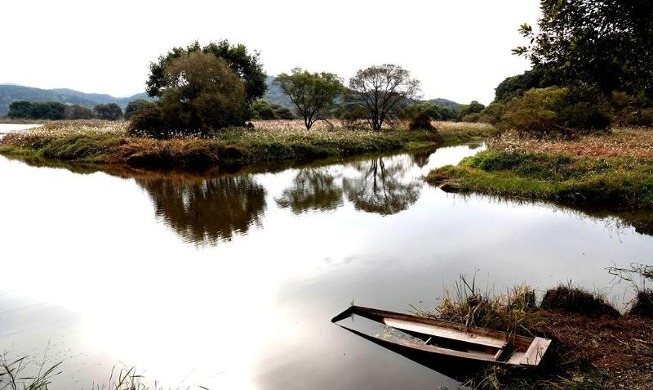
Preserving pristine nature for some 140 million years, Upo Wetland is the country's biggest natural inland wetland. Home to over 1,200 species of flora and fauna including otters and leopard cats, this perfect natural ecosystem is often called an "ecosystem museum."
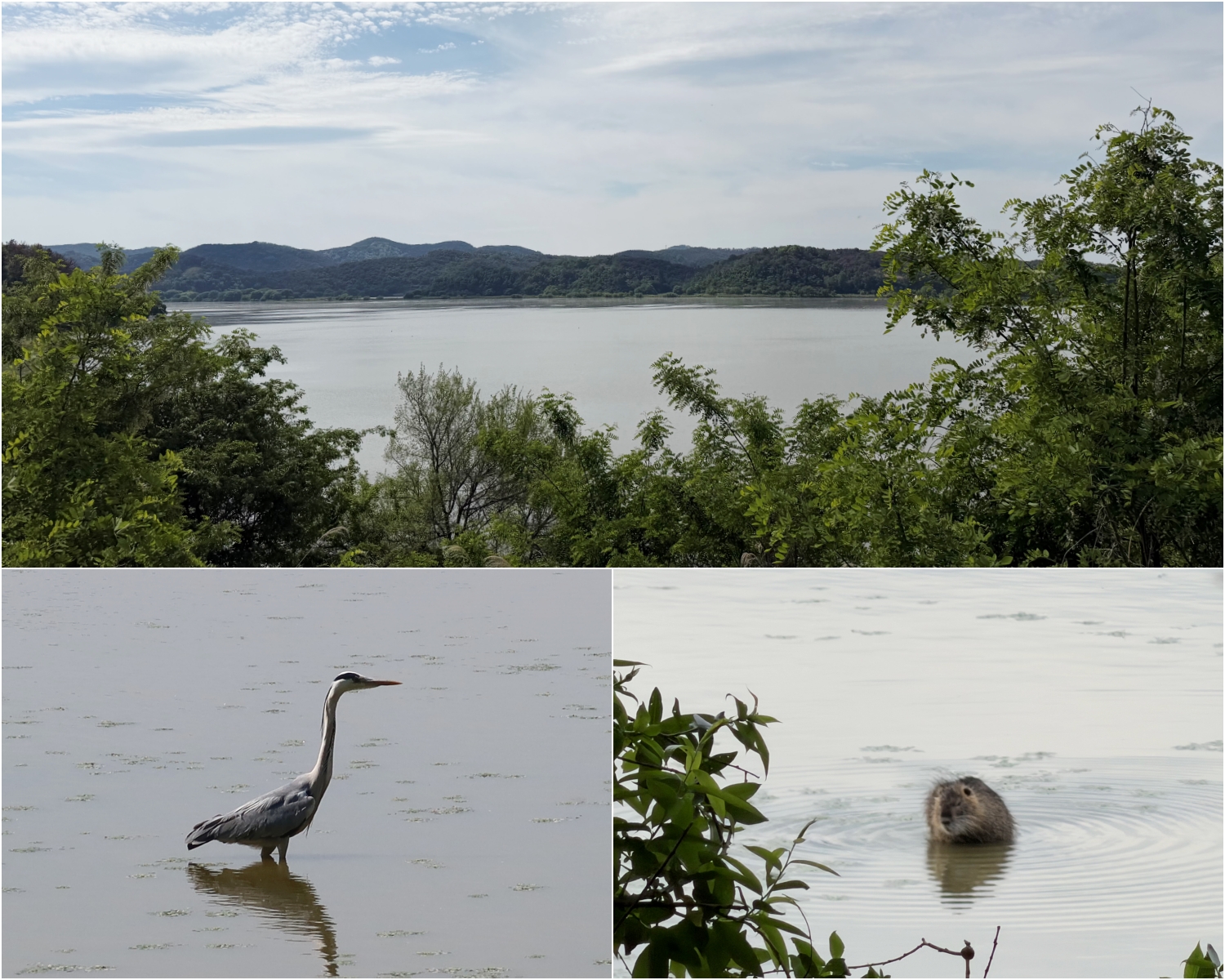
Upo Wetland on May 7 sees herons hunting fish and otters playing in water. Reed grass sways along the edges of the wetland and the sound of birds can be heard here and there. (Charles Audouin)
This gargantuan wetland forms a dynamic waterway as streams originating from nearby Hwawangsan Mountain converge and flow into the Nakdonggang River, which runs through the southeastern Korean Peninsula. The wetland floods when the river rises and exposes its bed when the river recedes, making it a massive organism that shares the pulse of and breathes with the river.
Upo Wetland is surrounded by low mountains. Spanning 2.5 km in length and 1.6 km in width, it is slightly smaller than the Yeouido neighborhood in Seoul. Its surrounding vast expanse of swamps of varying sizes creates breathtaking scenery distinct from lakes or reservoirs.
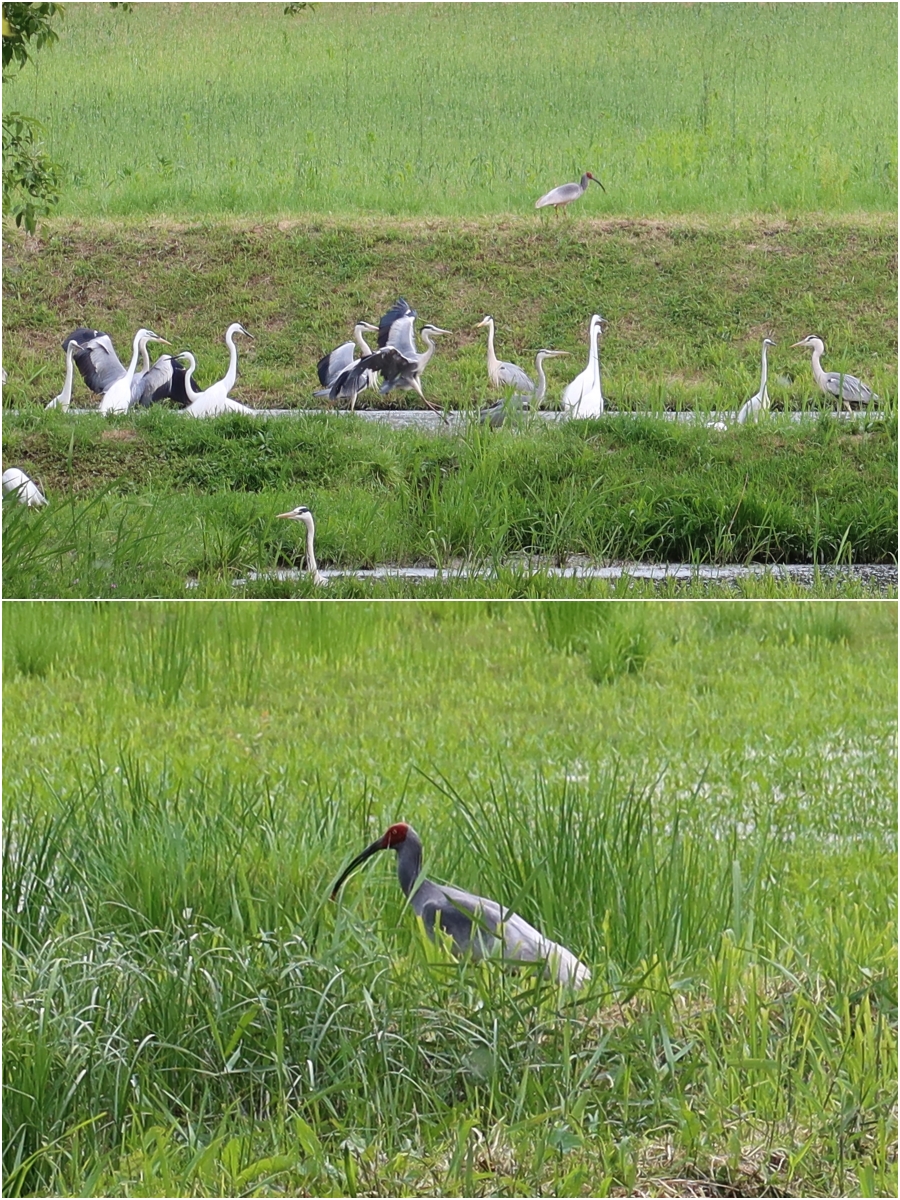
Birds such as the crested ibis (shown), heron and great egret are often seen on the trails around the Upo Crested Ibis Restoration Center. (Charles Audouin)
Steady efforts have preserved this place. Designated an ecosystem conversation area in 1997 by the Korean government, the area the following year was registered as an internationally protected wetland under the Ramsar Convention, which aims to protect the world's important wetlands.
In 2011, Upo Wetland was added to UNESCO's Tentative List of World Natural Heritage Sites. In 2024, all of Changnyeong-gun was designated a UNESCO Biosphere Reserve.
Under the 2025–29 Natural Heritage Protection Plan of the Korea Heritage Service announced last year, the next goal is for the wetland to gain official inscription as a UNESCO World Natural Heritage Site.
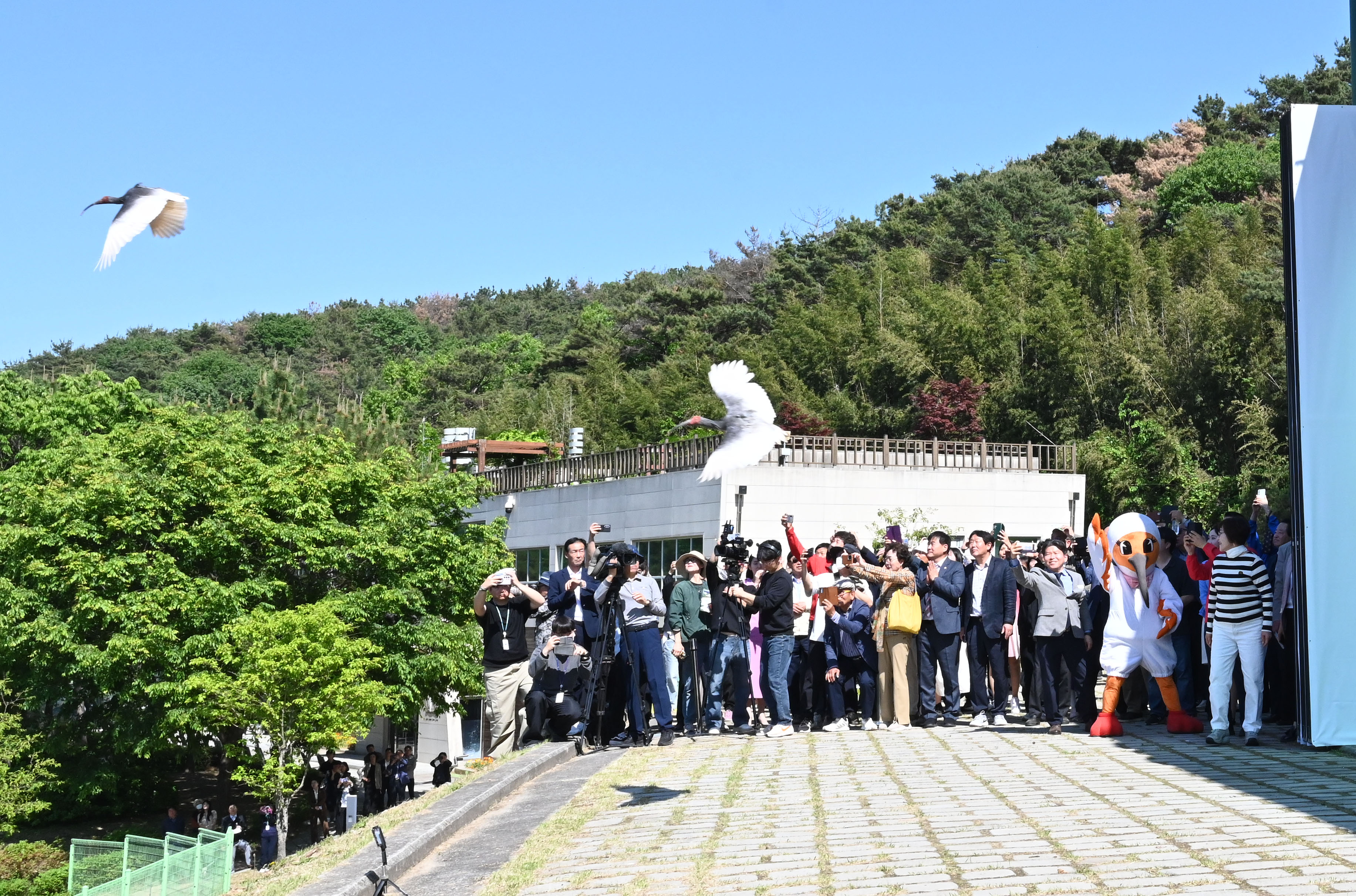
Fifty ibises on May 6 are released at the Upo Ibis Restoration Center in Changnyeong-gun County, Gyeongsangnam-do Province. Their white bodies turn gray when their breeding season begins. (Changnyeong-gun County)
The true value of Upo Wetland lies in the dynamic coexistence of the numerous flora and fauna there. In winter, migratory birds from around the world gather there to survive the cold and rest after a long and arduous journey because of the abundant food and comfortable resting place.
The wetland's biggest star is undoubtedly the crested ibis, for which a restoration project began for this endangered species, which went extinct in the country in 1979. The campaign began in 2008 after a pair of the birds were donated by Yangxian County, China.
The first release of the birds into the wild came in 2019, and about 400 of them have since followed.
The released crested ibises undergo training to survive in the wild such as flying, adaptation and loach hunting. The Changnyeong-gun government attached GPS trackers on some of the birds to observe their migration routes and survival status.
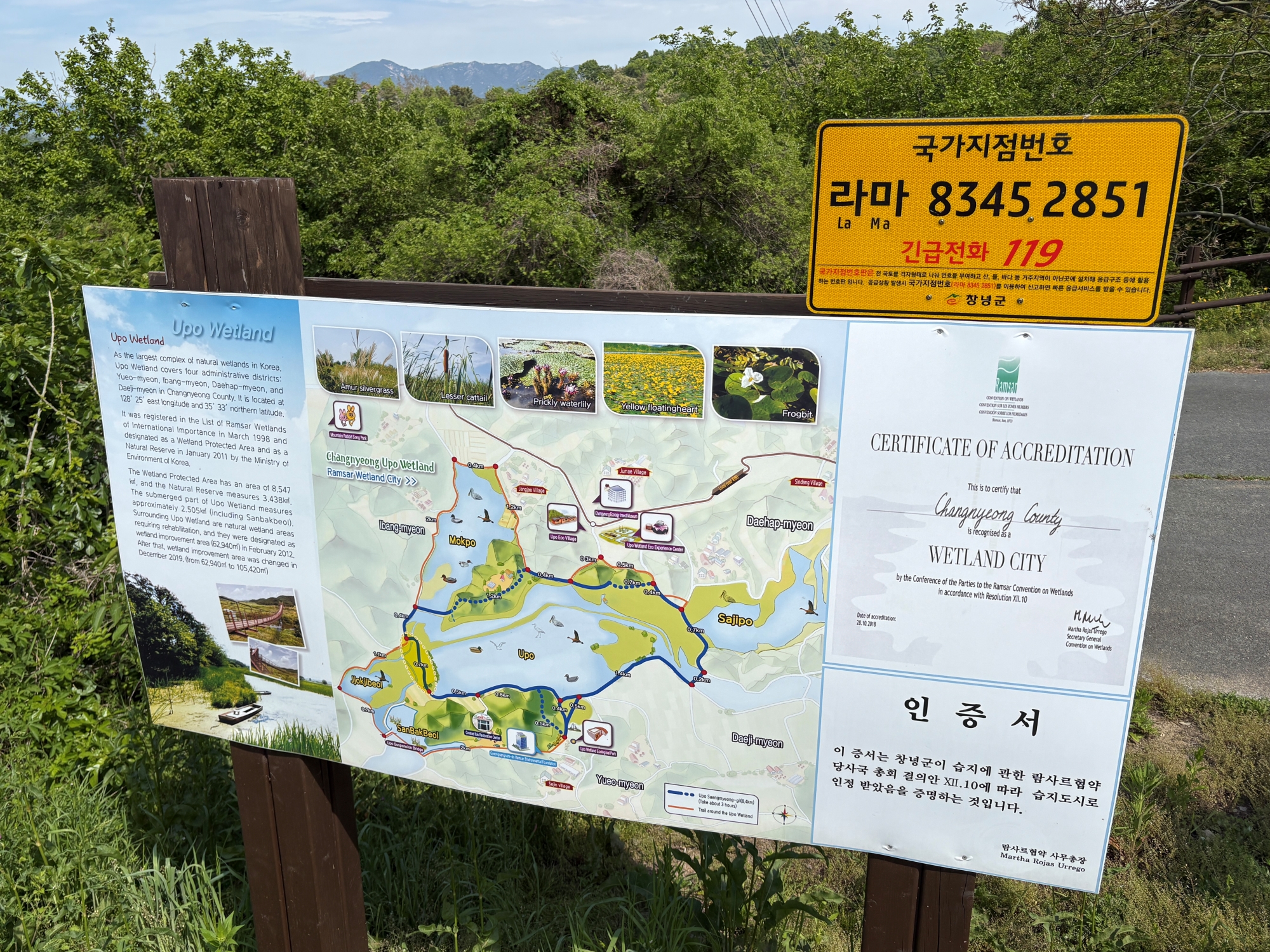
English-language map on hiking trail of Upo Wetland (Charles Audouin)
The best way to experience Upo Wetland is on foot to explore its walking trails of varying distances. The Upo Wetland Life Trail (8.4 km), which takes three hours to walk, is the main trail with great views of the wetland's scenery.
The birdwatching telescopes installed throughout the trail allow visitors to catch glimpses of the lives of herons and great egrets.
For those who want speed, a bicycle tour starts at the path from the Upo Wetland Ecological Center south of the wetland. Admission to the wetland is free, but bike rentals fees range from KRW 5,000 to KRW 7,000.
Upo Wetland: getting there
Upo Wetland is about an hour's drive from the nearby train stations Dongdaegu, Miryang and Changwon. Those using public transportation can take an intercity bus bound for Changnyeong-gun from Daegu or Busan and then transfer to a bus heading to Upo Wetland. Buses from Changnyeong-gun to Upo Wetland leave Changnyeong Terminal about five times a day.
caudouin@korea.kr
![[World Heritage candidates] ③ Unconventional Unjusa Temple](/upload/content/image/6355fec21ec64a42a5d00e0d8ce36952_20260408092301.jpg)
![[World Heritage candidates] ② Capital Fortifications of Hanyang](/upload/content/image/b4b3560f9a744c8faf89ea5c0c902a1a_20260309082721.jpg)
![[World Heritage candidates] ① Busan: refugee hub of Korean War](/upload/content/image/2013b0a594b344268b6e4bca4795ad63_20260121105424.jpg)
![[Exploring Local 100 ③] Upo Wetland: pristinely preserved nature](/upload/content/image/7f1e92eca34c4ecaa7b96bb6c118672a_20231214163604.jpg)