- 한국어
- English
- 日本語
- 中文
- العربية
- Español
- Français
- Deutsch
- Pусский
- Tiếng Việt
- Indonesian
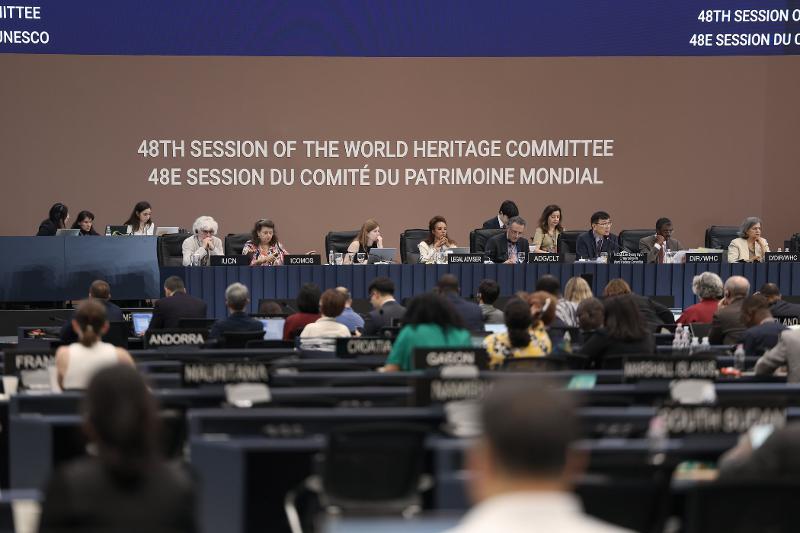
Lee Byong Hyun, chairperson of this year's annual session of the UNESCO World Heritage Committee (third from right), on July 8 presides over the plenary session at the main conference hall of the convention center BEXCO in Busan's Haeundae-gu District. (UNESCO)
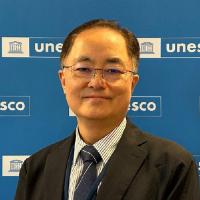
By Choi Jaeheon
Professor at Dept. of Geography, Graduate School of World Heritage Studies at Konkuk University Chairperson of ICOMOS Korea
In July 2026, Busan was the stage where the world gathered to discuss the heritage that humanity must preserve together. Korea chaired the 48th session of the UNESCO World Heritage Committee in a first since joining the World Heritage Convention in 1988. The event attracted 3,140 participants from 162 countries, with 25 ministerial-level officials and 367 domestic and international journalists attending.
The most eye-catching moment of the event was the appearance of President Azali Assoumani of Comoros. His visit marked his country's first entry in the World Heritage list and the first time for an incumbent head of state to attend the session. This moment showed how the Busan conference was more than just a gathering of experts; it was a forum through which countries built trust and solidarity among themselves through culture and natural heritage.
The heart of the session was deliberation on 33 nominations for UNESCO World Heritage, with 25 approved -- 19 cultural, five natural and one mixed -- plus two expanded boundary modifications -- includng Getbol (gaetbol), Korean Tidal Flats and one amendment to the inscription criteria. As a result, the list rose to 1,273 items in 173 countries.
Comoros, Sao Tome and Principe, and South Sudan all saw their first World Heritage inclusions, expanding the list's regional balance and cultural diversity. All decisions were reached by consensus without any disagreement from committee member states, showing how dialogue and mutual understanding led to common conclusions in Busan.
Yet the committee's work is more than just adding cultural heritage. Another core task was reviewing the preservation status of the 148 properties on the World Heritage list. Such sites face complex and multifaceted threats such as climate change, natural disasters, urban development, growing tourism and armed conflict. Against this backdrop, the Historic Inner City of Paramaribo in Suriname, Ancient City of Tauric Chersonese and its Chora in Ukraine, and Tyre in Lebanon were newly inscribed as World Heritage in Danger.
Heritage sites in South Sudan, Lebanon and Palestine that were designated under emergency procedures were also registered as World Heritage in Danger. In contrast, the Historic Centre of Vienna in Austria was removed from the list given its longstanding conservation and management efforts despite opposition from advisory bodies. Both trends were a reminder that the list is a mechanism of solidarity that gathers global attention and professional support for heritage sites in crisis.
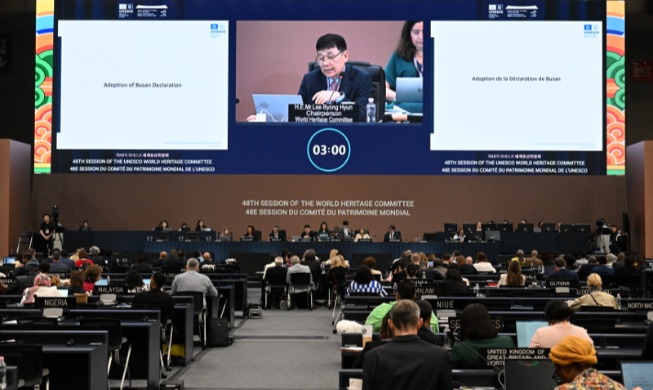
Adopted by consensus on the first day of the plenary session, the Busan Declaration on World Heritage was perhaps the most symbolic result of the session. It begins with the awareness that no single country alone can resolve issues such as armed conflict, climate change, developmental pressure and digital transformation. It thus proposed adding "collaboration" as the sixth of the World Heritage Convention's five strategic objectives: credibility, conservation, capacity building, communication and communities.
The declaration also includes provisions for the integrated protection of cultural and natural heritage, improvement of the capacity of site managers, empowerment of surrounding communities and youth to voice their opinions, pursuit of inclusive interpretations that respect diverse histories and memories, and responsible use of digital technology including artificial intelligence. It elevated the concept of "collaboration" from an idealistic slogan to a concrete guiding principle on the practical safeguarding of heritage.
The sideline events were just as important as the plenary session, with 61 programs covering issues like capacity building for small island developing states, transboundary conservation of Yellow Sea tidal flats, heritage interpretation and peacebuilding, responses to climate change, conservation and use of modern and contemporary heritage, and participation of youths and local communities.
While the official deliberations covered country-specific agenda, the sideline events were like open forums for experts, international organizations, civic groups and field managers to exchange their experiences and know-how. Recommendations from the World Heritage Young Professionals Forum of 31 participants from 29 countries and World Heritage Site Managers' Forum of 74 participants from 45 countries were presented at the plenary session, highlighting practical youth participation and people-centric inclusive management. This firmly demonstrated the spirit of the declaration, which says the future of World Heritage sites must be shaped not only by governments and experts, but also by site managers, youth and residents working together.
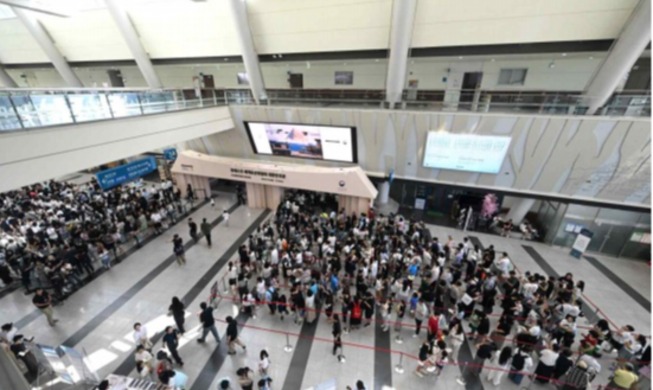
More than just a gathering of experts, the session was a venue for cultural diplomacy involving the wider public. The promotional pavilion K-Heritage House, with 35 participating organizations, attracted about 137,000 visitors in 10 days. Both domestic and foreign visitors got to learn about Korean culture and natural heritage through exhibitions, interactive events, field trips and performances of intangible cultural heritage.
The Phase II expansion of Getbol, Korean Tidal Flats was thanks to collaboration by the central and local governments, experts and regional communities faithfully following global recommendations. The addition of tidal flats in Yeosu and the counties of Goheung-gun and Muan-gun in Jeollanam-do Province, and Seosan, Chungcheongnam-do Province, raised the ecological connectivity and integrity of the sites.
The 10-day session showed how Korea is more than a country that possesses and protects World Heritage sites, but also a responsible partner leading the development of the World Heritage System and promoting international solidarity. The remaining task is to ensure that the declaration and proposals presented to the session are not one-off discussions but translate into consistent policies and on-the-ground projects.
When the message of cooperation that began in Busan spreads and manifests themselves into concrete actions for heritage sites threatened by the climate crisis and conflict as well those who safeguard them and future generations, the Busan session will be long remembered as setting a milestone for the World Heritage Convention.
Choi Jaeheon is a professor at the Department of Geography and Graduate School of World Heritage Studies at Konkuk University in Seoul, as well as director of the World Heritage Research Center. Earning his bachelor's and master's degrees from Seoul National University and his Ph.D. in geography from the University of Minnesota, he has since 1995 researched and taught urban geography and world heritage at Konkuk. He spearheaded the launch of the graduate school at Konkuk and contributed to the designation of Namhansanseong Fortress and Sansa, Buddhist Mountain Monasteries in Korea as UNESCO World Heritage. As chair of the Korean National Committee of ICOMOS (International Council on Monuments and Sites) and vice chair of the ICOMOS affiliate International Committee on Interpretation and Presentation, he is active in global cooperation in World Heritage conservation and management, heritage impact assessments, historic urban landscapes, inclusive heritage interpretation and peacebuilding.
jihlee08@korea.kr
![[World Heritage session in Busan] ④ Ancient tombs & fire festival](/upload/content/image/96c6907d8e7c4fd39daac6d622c7b452_20260728210605.jpg)
![[World Heritage session in Busan] ③ Photo essay of related events](/upload/content/image/8afd6581d01148138736d45fa9906d0b_20260727104912.jpg)
![[World Heritage session in Busan] ② Four coastal tidal flats added](/upload/content/image/c63e2920d30c483ba40b3d70f724b5c8_20260726123202.jpg)
![[World Heritage session in Busan] ① Enchanting K-Heritage House](/upload/content/image/f178972f05c043a8a5358eaffb78a8f4_20260723232819.jpg)