


gnb content footer

Korea.net Gatewav to Korea

home

Government

Constitution and Government

Executive Branch

Executive Branch

The President

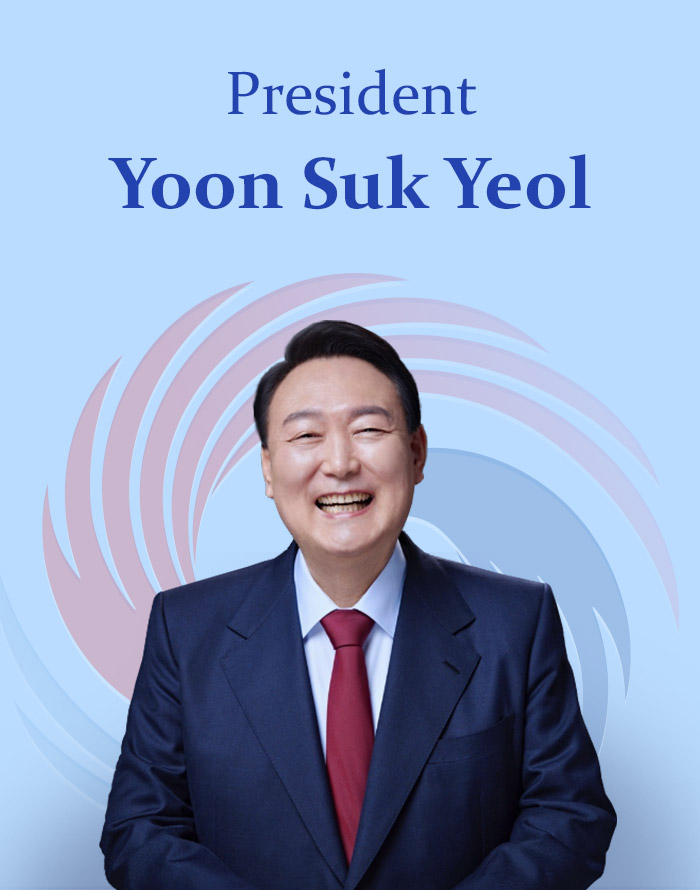
The President of the Republic of Korea, elected by a nationwide, popular vote, stands at the apex of the executive branch.

The President serves a single five-year term, with no additional terms being allowed. This single-term provision is a safeguard for preventing any individual from holding the reins of government power for a protracted period of time. In the event of presidential disability or death, the Prime Minister or members of the Cabinet will temporarily serve as the President as determined by law.

Cheong Wa Dae (Office of the President) www.president.go.kr

Under the current political system, the President plays five major roles. First, the President is head of state, symbolizing and representing the entire nation both in the governmental system and in foreign relations. He receives foreign diplomats, awards decorations and other honors, and grants pardons. He has the duty to safeguard the independence, territorial integrity, and continuity of the state and to uphold the Constitution, in addition to the unique task of pursuing the peaceful reunification of Korea.

Second, the President is the chief administrator and thus enforces the laws passed by the legislature while issuing orders and decrees for the enforcement of laws. The President has full power to direct the Cabinet and a varying number of advisory organs and executive agencies. He is authorized to appoint public officials, including the Prime Minister and heads of executive agencies.

Third, the President is commander-in-chief of the armed forces. He has extensive authority over military policy, including the power to declare war.

Fourth, the President is the nation's top diplomat and foreign policy maker. He accredits or dispatches diplomatic envoys, and signs treaties with foreign nations.

Finally, the President is chief policy maker and a key lawmaker. He may propose legislative bills to the National Assembly or express his views to the legislature in person or in writing. The President cannot dissolve the National Assembly, but the Assembly can hold the President ultimately accountable to the Constitution by means of an impeachment process.

Cabinet

Under Korea's presidential system, the President performs his executive functions through a Cabinet made up of 15 to 30 members and presided over by the President, who is solely responsible for deciding all important government policies. The Prime Minister is appointed by the President and approved by the National Assembly. As the principal executive assistant to the President, the Prime Minister supervises the administrative ministries and manages the Office for Government Policy Coordination under the direction of the President. The Prime Minister also has the power to deliberate major national policies and to attend the meetings of the National Assembly.

Members of the Cabinet are appointed by the President upon recommendation by the Prime Minister. They have the right to lead and supervise their administrative ministries, deliberate major state affairs, act on behalf of the President and appear at the National Assembly and express their opinions. Members of the Cabinet are collectively and individually accountable to the President only.

Cabinet meeting presided over by President Lee Myung-bak

In addition to the Cabinet, the President has several agencies under his direct control to formulate and carry out national policies: the Board of Audit and Inspection of Korea, the National Intelligence Service, and the Korea Communications Commission. The heads of these organizations are appointed by the President, but the presidential appointment of the Chairman of the Board of Audit and Inspection is subject to the approval of the National Assembly. The Board of Audit and Inspection has the authority to audit the financial accounts of central and local government agencies, government corporations and related organizations. 

The board is also vested with the power to inspect abuses of public authority or misconduct by public officials in their official duties. The results of audits are reported to the President and the National Assembly, although the board is responsible only to the chief executive.

The National Intelligence Service is authorized to collect strategic intelligence of internal as well as external origin and information on subversive and international criminal activities. It also plans and coordinates the intelligence and security activities of the government.

The Korea Communications Commission comprises five standing members who run the committee on a consensus-basis. It is the highest-level agency that governs broadcasting, telecommunications and real-time Internet television services or IPTV.

Government Structure

Central Government

CheongwaDae

  • Cheong Wa Dae, or the Blue House, is the executive office and official residence of the Korean head of state, the President of the Republic of Korea. The name refers to the building's blue-green roof. Cheong Wa Dae is a complex of buildings, built largely in the traditional Korean style with some modern elements.
  • http://english.president.go.kr
Board of Auditand Inspection

  • Board of Audit and Inspection examines the final accounts of revenues and expenditures of the government offices, audits their accounts and such organizations as prescribed by the laws, and inspects works performed by government agencies and the duties of their staff. BAI may initiate the review process on its own authority if it finds its decisions inappropriate or unjust, as long as such a finding has been made within two years after the decision.
  • http://english.bai.go.kr
National Intelligence Service

  • National Intelligence Service collects and distributes information on the nation's strategy and security, maintains documents, files, materials, and facilities related to the nation's classified information and investigates crimes affecting national security. NIS was created in 1961 as the Korea Central Intelligence Agency (KCIA) and changed its name to Agency for National Security Planning (NSP) in 1961 and to the current NIS in 1999.
  • http://eng.nis.go.kr
Korea Communications Commission

  • Embracing the core function of the former Korean Broadcasting Commission and the Ministry of Information & Communication, Korea Communications Commission promotes the convergence process between broadcasting and telecommunications. The commission is devoted to such tasks as advancement of broadcasting service market, investment expansion in communications services, support for overseas market development and spread of "green IT."
  • http://eng.kcc.go.kr
Ministry of Patriots and Veterans Affairs

  • Ministry of Patriots and Veterans Affairs honors and secures well-being of independence fighters, soldiers and police officers, who devoted and sacrificed their lives for the nation and its people, and preserves and descends their noble patriotic spirit as a paragon of patriotism. By doing so, the ministry promotes patriotic spirit among people and lays the spiritual groundwork for national development.
  • http://english.mpva.go.kr
Fair Trade Commission

  • Fair Trade Commission formulates and administers national competition policies, and deliberates, decides, and handles antitrust cases without any intervention from outside organizations. The commission is committed to four main mandates: promoting competition, strengthening consumer rights, creating a competitive environment for SMEs and restraining concentration of economic power. To that end, it enforces nine laws including the Monopoly Regulation and Fair Trade Act.
  • http://eng.ftc.go.kr
Financial Services Commission

  • Financial Services Commission deliberates and resolves important financial issues concerning the advancement of financial industry, the stability of financial markets, the promotion of a sound credit system and fair trading practices. The commission focuses on devising sophisticated financial policies to make sure Korea's financial markets remain safe and sound as they advance into vibrant and globally competitive marketplaces.
  • http://www.fsc.go.kr
Anti-corruption and Civil Rights Commission

  • Anti-corruption and Civil Rights Commission builds a sound society by preventing and deterring corruption in the public sector and protects people's rights from illegal and unfair administrative practices through the administrative appeals system. The commission was launched in early 2008 by integrating the Ombudsman of Korea, the Korea Independent Commission against Corruption and the Administrative Appeals Commission.
  • http://www.acrc.go.kr
Ministry of Strategy and Finance

  • Ministry of Strategy and Finance plans and coordinates the mid- to long-term socio-economic development goals and sets economic policy direction on an annual basis; distributes resources effectively and assesses the effectiveness of budget execution; and plans and reforms Korea's taxation policy and system. The Ministry is at the core of the government efforts to combat against 2008 global financial setback.
  • http://english.mosf.go.kr
Ministry of Education,Science and Technology

  • Ministry of Education, Science and Technology nurtures basic learning capacity in pre-school children, provides appropriate education for primary and secondary students and strengthen higher education in order for nationwide universities to gain international competitiveness. It endeavors to double the satisfaction of public education while reducing the cost of private education.
  • http://english.mest.go.kr
Ministry of Foreign Affairs and Trade

  • Ministry of Foreign Affairs and Trade establishes, conducts, generates and regulates foreign policies on trade, negotiations and external economic affairs; protects and supports overseas Korean nationals; conducts analysis of the international environment; and provides consular services. The Ministry is heavily charged with the mission of concluding free trade agreements with global counterparts, including the U.S., Japan and China.
  • http://www.mofat.go.kr
Ministry of Unification

  • Ministry of Unification establishes North Korea policy, coordinates inter-Koran dialogue, pursues inter-Korean humanitarian cooperation and provides education programs on unification. The Korea Institute for National Unification, a major think tank of the ministry, plays the central role in researching on North Korea and unification.
  • http://www.unikorea.go.kr
Ministry of Justice

  • Ministry of Justice serves the people of the Republic of Korea by guarding and enforcing the Constitution and laws of the republic and renders legal advice to the President, the Prime Minister, and other Cabinet members. It is also in charge of correctional and rehabilitative administration and immigration.
  • http://www.moj.go.kr
Ministry of National Defense

  • Ministry of National Defense provides military security for the people of the Republic of Korea, supports the establishment of a peace regime on the Korean peninsula and contributes to regional security and world peace.
  • http://www.mnd.go.kr
Ministry of Public Administration and Security

  • Ministry of Public Administration and Security makes efforts to meet public demands by serving the people and transforming the Korean government into a more capable and efficient organization, based on the principle of harmony between the central and local governments.
  • http://www.mopas.go.kr
Ministry of Culture, Sports and Tourism

  • Ministry of Culture, Sports and Tourism develops and implements a wide range of policies to promote culture, arts, sports, tourism and religion so as to provide cultural opportunities to the public. Korean Culture and Information Service belongs to the ministry.
  • http://www.mct.go.kr
Ministry for Food, Agriculture, Forestry and Fisheries

  • Ministry for Food, Agriculture, Forestry and Fisheries aims to upgrade agriculture from primary production-based industry to advanced industry, which encompasses processing and marketing so that domestic agriculture and fisheries can compete in the global arena.
  • http://english.mifaff.go.kr
Ministry of Knowledge Economy

  • Ministry of Knowledge Economy is responsible for fostering traditional industrial structures and developing new growth engines which are crucial for industrial innovation.
  • http://www.mke.go.kr
Ministry for Health, Welfare

  • Ministry of Health and Welfare protects the public from social risks, promotes social integration and provides quality social services. Korea Food and Drug Administration under the Health Ministry promotes the public health by ensuring the safety and efficacy of foods and pharmaceuticals.
  • http://english.mw.go.kr
Ministry of Environment

  • Ministry of Environment protects the nation from the threat of pollution and improves the quality of life so that people can enjoy clean water and clear skies. It also aims to contribute to global efforts to protect the Earth.
  • http://eng.me.go.kr
Ministry of Employmentand Labor

  • Ministry of Employment and Labor is responsible for labor standards, occupational safety and health, employee welfare, employment policies, equal employment and other labor affairs.
  • http://english.molab.go.kr
Ministry of Gender Equality and Family

  • Ministry of Gender Equality and Family develops and implements policies to nurture women in the labor force and improve women's rights, provides relevant education programs and conducts research on gender equality. It also promotes family- and youth-related policies.
  • http://english.moge.go.kr
Ministry of Land Transport and Maritime Affairs

  • Ministry of Land Transport and Maritime Affairs focuses on constructing transportation and logistics networks that reach out to the 5 oceans and 6 continents so as to make the country fully equipped with strong linkages.
  • http://english.mltm.go.kr

http://www.korea.net/Government/Constitution-and-Government/Executive-Branch

URL Copy

Department Global Communication and Contents Division